Month chart
Best time to visit Kamakura, month by month
Pick a month
Kamakura month by month
Tap a month for its sunset, its day length, its temperatures and what the season brings.
Sunset
Jan
Feb
Mar
Apr
May
Jun
Jul
Aug
Sep
Oct
Nov
Dec
Sunset is calculated for the 15th of each month, Japan time. Day length and temperatures: NOAA averages for its Yokosuka station, 11.6 km from Kamakura, 1991 to 2020.
Kamakura is open all year, but its flowers, its beaches and its crowds arrive on a calendar. Here is what each month brings, with real temperatures and rain.
Editorial team, kamakuradaytrip.quest · Updated November 1, 2026 · A 6-minute read
Facts first
- SpringCherry blossoms from the end of March to early April; April and May are pleasant.1,2
- HydrangeasEarly June to early July, in the rainy season.3,4
- AutumnColors peak from late November to early December.5
- AvoidJuly and August often top 35°C.6
- WinterMild, with daytime temperatures rarely below freezing.7
The short version of the best time to visit Kamakura
The Kamakura City Tourist Association says the average annual temperature is around 17°C, with cherry blossoms in spring, hydrangeas and sandy beaches in summer, colorful foliage in fall, and relatively warm winters that make it a great place to visit any time of year.8
That is true, and it is why no month is wrong. But some months suit some plans. If you want flowers, aim at the weeks listed below. If you want to walk between temples comfortably, April, May, October and the first half of November are the easy ones. If you want emptier lanes, go in winter, when the days are short and the temples are quieter.
The weather file below uses NOAA data from the Yokosuka station, 11.6 km from Kamakura, so it reads a little different from the town itself, but the pattern holds: a wet early summer, a hot August, a rainy September and October, and a drier winter.9
Spring: cherry blossoms and a chilly March
March is still a little chilly, with an average temperature of 13°C, so you need a coat or jacket.10 April and May are pleasant, with averages around 16°C in April and 19°C in May, and the cherry blossoms begin to bloom in April.2
Odakyu gives the end of March to the beginning of April for cherry blossoms in Kamakura.1 April also brings the Kamakura Festival, a week-long event with dancing and traditional performance, and the Japan National Tourism Organization warns that the city gets very crowded during it.14 The festival centers on Tsurugaoka Hachimangu, so if the shrine is your main goal, pick a weekday outside the festival week.
Spring is the season to choose if your priority is easy walking weather and a postcard backdrop. Arrive at the early-opening temples first, and book a bus day or a train seat well ahead if your dates fall in the blossom week. Allow extra time for the walk between sights, because the lanes and the station platforms fill up, and keep your plan flexible enough to drop a stop if a queue is long.
Rain by month
How much rain falls each month
- Jan58 mm
- Feb49 mm
- Mar114 mm
- Apr95 mm
- May129 mm
- Jun139 mm
- Jul145 mm
- Aug111 mm
- Sep161 mm
- Oct201 mm
- Nov116 mm
- Dec46 mm
Average monthly rainfall at NOAA's Yokosuka station, 11.6 km from Kamakura, 1991 to 2020; October is the wettest month and December the driest.9
Early summer: rain, heat and Kamakura hydrangea
Average temperatures in summer are around 25°C in June, 29°C in July and 30°C in August, and the annual rainy season spans June and July, so an umbrella is a must.4 Yet June is also when the hydrangeas are in full bloom.4
Odakyu gives early June to early July for hydrangeas at Hasedera, Meigetsuin, Kamakura Seaside Park and the Inamuragasaki district.3 Meigetsuin is also known as the Hydrangea Temple, and its opening times may change in June when the blooms are out.15,16 For Kamakura hydrangea, arrive early and plan for queues.
A drizzly day is not a disaster, because the blue and pink flowers photograph well against wet leaves. Pack a light rain jacket, wear shoes that can take puddles, and keep an indoor plan, such as the temple halls, for the downpour.
Decision helper
Which month should you pick?
Match the month to what you want to see
If I want cherry blossoms
From late March into early April
Odakyu gives that window.1
If I want hydrangeas
Early June to early July
At Hasedera and Meigetsuin.3
If I want autumn colors
Late November
Peak colors run to early December.5
If I want a swim
July or August
Beaches are open July 1 to August 31.11
If I want quiet and mild days
Winter
Daytime temperatures rarely drop below freezing.7
Midsummer: heat, beaches and fireworks
July and August are scorchingly hot, with temperatures often exceeding 35°C.6 The tourist association suggests sightseeing in the morning when temperatures are lower, spending the daytime in cooler places such as museums, and having dinner at a beachfront umi no ie once the heat has settled.6
Beaches and umi no ie in Kamakura are open from July 1 to August 31, and the Kamakura Fireworks Festival is held.11 The coastline has five main areas, including Yuigahama, Zaimokuza and Kashigoe.17 If a swim is on your list, this is the window. Check the beach flags and the local notices before you go in, and keep valuables in a locker rather than on the sand.
For temple sightseeing, midsummer is the hardest season. Start before breakfast, drink often, and use the Enoden for short rides between sights instead of walking the whole way.
The Kamakura year
What each season brings
Autumn: the Great Buddha of Kamakura in autumn
September is still hot, averaging about 27°C, October is around 21°C and November is 15°C.12 The leaves are at their most impressive from late November through early December, the association says, making it the perfect season for hiking.5
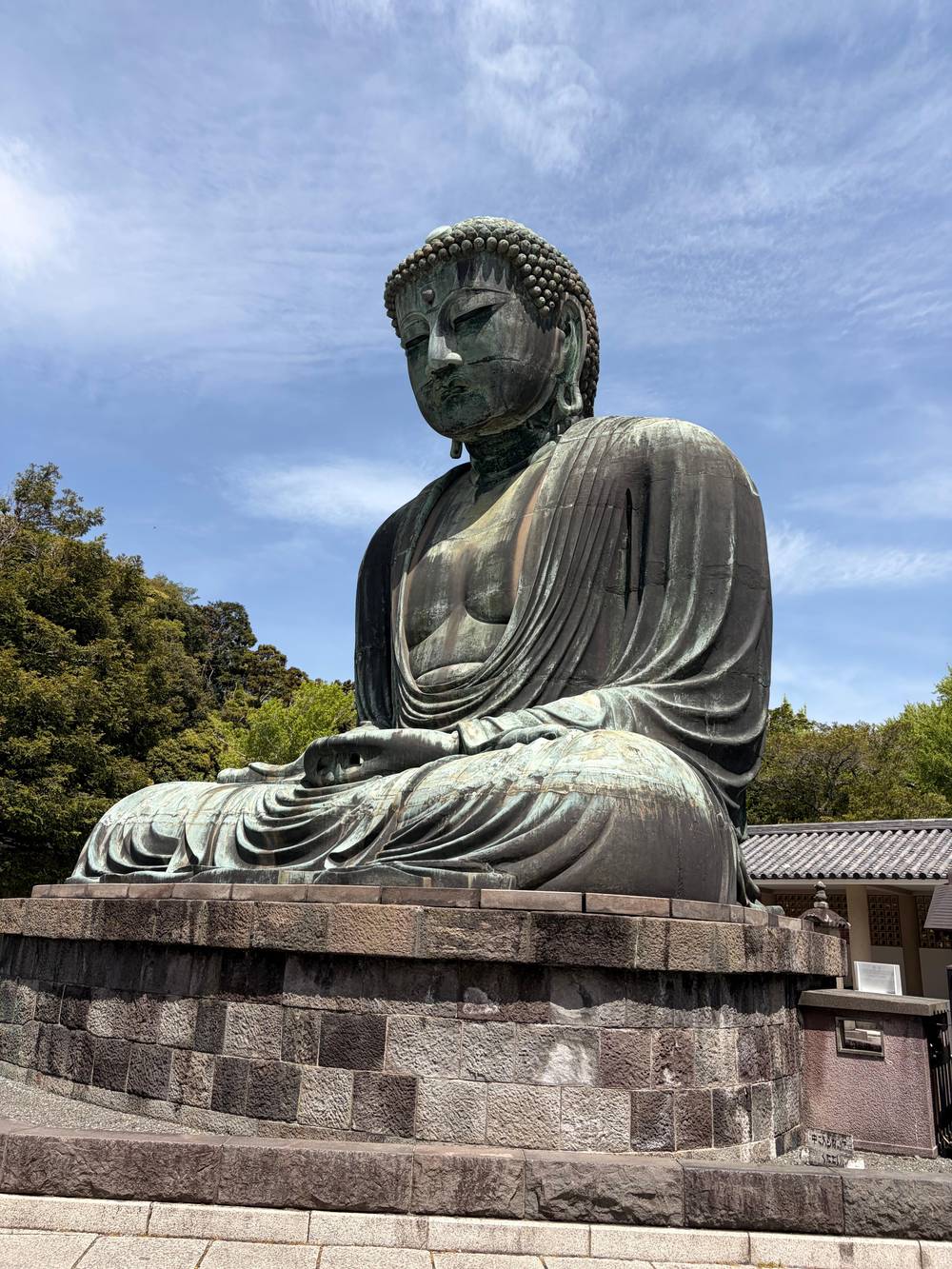
Odakyu gives late November to mid-December for autumn colors at Hasedera, Meigetsuin, Kenchoji and other temples.18 The Great Buddha of Kamakura in autumn is a good pairing too: the tourist association's flower report for Kotoku-in lists Japanese bush clover and autumn leaves.19
One more date for the diary: a candle event runs from mid-October to early November at the Enoshima Samuel Cocking Garden, a pleasant finish after a day of temples.20 Events fill the season. Yabusame horseback archery runs at the Tsurugaoka Hachimangu Annual Festival in September, and Kamakura Takigi Noh is performed at Kamakuragu Shrine in October.21 The September festival also draws large crowds, the national tourism office notes.14
Video
Day trip from Tokyo: Kamakura
Japan Guide on YouTube · YouTube stays silent until you press play.
Enjoy the cherry blossoms in spring, hydrangeas and sandy beaches in summer, and colorful autumn foliage in fall.
Checklist
What to pack by season
Cooler months3
- A coat in March, a warm coat from December
- Gloves and a hat in January and February
- Check early closing times in winter
Warm months3
- An umbrella for June and July
- Water and shade planning for July and August
- Light shoes that dry quickly
Winter in Kamakura: quiet, mild and bright
The weather gets colder in December, with averages of about 10°C, and about 7°C in January and February. Daytime temperatures rarely drop below freezing, but the association recommends a warm coat, gloves and a hat.7 That is the Kamakura winter in short: cold mornings and mild afternoons. If you plan a winter day, dress in layers you can remove, carry a thermos, and treat the shorter daylight as a reason to start early rather than a reason to stay home.
January brings hatsumode, the first temple or shrine visit of the year, when many people come to Kamakura.13 The Enoshima illumination, the Gems of Shonan, runs from the end of November to the end of February around the Samuel Cocking Garden.22
Winter is the season for temples without the summer queues. The days are shorter, so check closing times: Kotoku-in closes at 17:00 from October to March, and Hasedera takes entries until 16:30 from July to March.23,24
FAQ
Asked often, answered briefly.
When are the cherry blossoms in Kamakura?
When is hydrangea season?
When do the leaves turn?
The tourist association says that is when the leaves are most impressive.5
Is Kamakura too hot in summer?
Sightsee in the morning and rest in cooler places by day.6
Does it rain a lot in June?
The rainy season spans June and July, so bring an umbrella.4
Is winter a good time to visit?
Daytime temperatures rarely drop below freezing; dress warmly.7
When does beach season start?
Beaches and umi no ie are open in July and August.11
Sources
- Odakyu Electric Railway · Enoshima and Kamakura ↩
- Kamakura City Tourist Association · Seasons in Kamakura ↩
- Odakyu Electric Railway · Enoshima and Kamakura ↩
- Kamakura City Tourist Association · Seasons in Kamakura ↩
- Kamakura City Tourist Association · Seasons in Kamakura ↩
- Kamakura City Tourist Association · Seasons in Kamakura ↩
- Kamakura City Tourist Association · Seasons in Kamakura ↩
- Kamakura City Tourist Association · Seasons in Kamakura ↩
- NOAA · Global Summary of the Month, Station Yokosuka (NOAA GHCN JAW00043323), 1991 to 2020 ↩
- Kamakura City Tourist Association · Seasons in Kamakura ↩
- Kamakura City Tourist Association · Seasons in Kamakura ↩
- Kamakura City Tourist Association · Seasons in Kamakura ↩
- Kamakura City Tourist Association · Seasons in Kamakura ↩
- Japan National Tourism Organization · Kamakura ↩
- Kamakura City Tourist Association · Meigetsuin Temple ↩
- Kamakura City Tourist Association · Meigetsuin Temple ↩
- Japan National Tourism Organization · Kamakura ↩
- Odakyu Electric Railway · Enoshima and Kamakura ↩
- Kamakura City Tourist Association · Kotokuin Temple (Great Buddha) ↩
- Odakyu Electric Railway · Enoshima and Kamakura ↩
- Kamakura City Tourist Association · Seasons in Kamakura ↩
- Odakyu Electric Railway · Enoshima and Kamakura ↩
- Kamakura City Tourist Association · Kotokuin Temple (Great Buddha) ↩
- Kamakura City Tourist Association · Hasedera Temple ↩
- Kamakura City Tourist Association · Tsurugaoka Hachimangu Shrine
- Kamakura City Tourist Association · Engakuji Temple
- Japan National Tourism Organization · Kamakura