Quiet start
Early walk
Before the museum opens
- Gate6:00 to 20:00
- From the station10 minutes
- Museum opens10:00
Guides
Language
Currency
Check open daysstarting at $51 · plans can change freeWhere things are
44 places to see
Choose an area, then touch a pin or a name for a short note and directions.
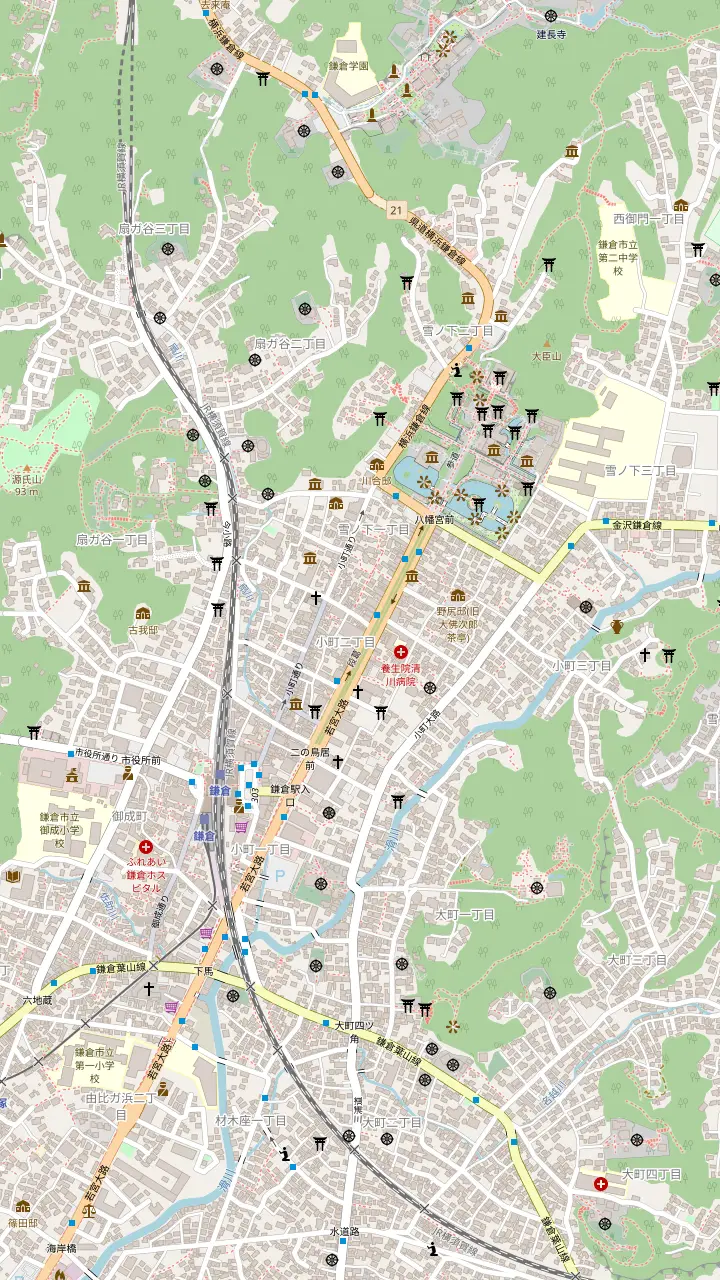
JR Kamakura Station: the shrine is a 10-minute walk from its east exit.
Starts 2 minutes on foot from the east exit and runs to the shrine, with about 250 shops.
Google MapsA straight 2 km pathway from Yuigahama Beach to the shrine, modeled on Suzaku Oji in Kyoto.
The Genji Pond has three islands and the Heike Pond four; lotus blooms here in summer.
Shrine moved here by Yoritomo in 1180; the gate is open 6:00 to 20:00 all year.
Google MapsMuseum opened in 2019; open 10:00 to 16:30 and closed on Mondays.
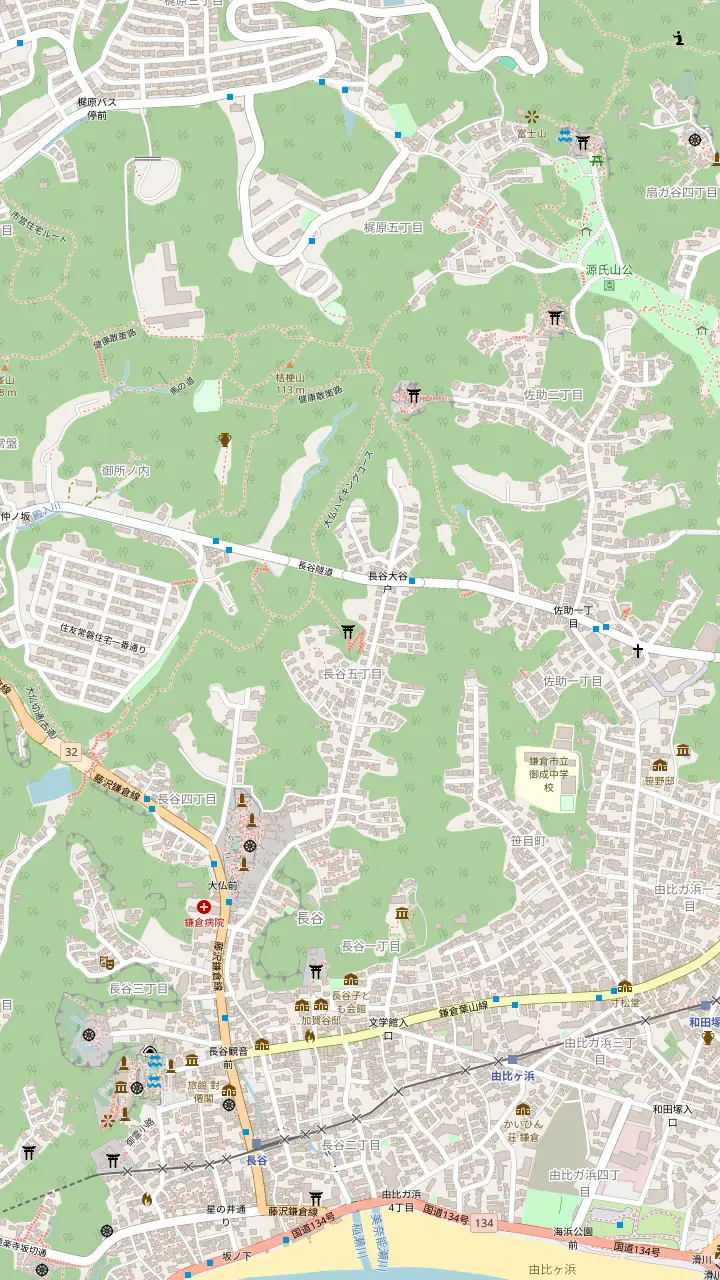
Enoden stop; the Great Buddha is a 7-minute walk and Hasedera Temple a 5-minute walk.
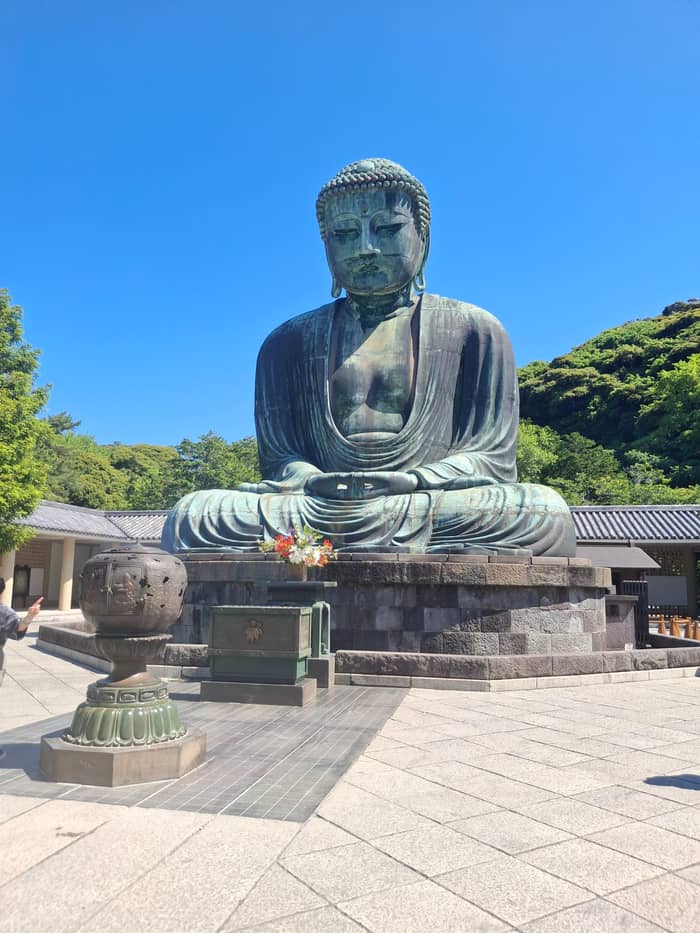
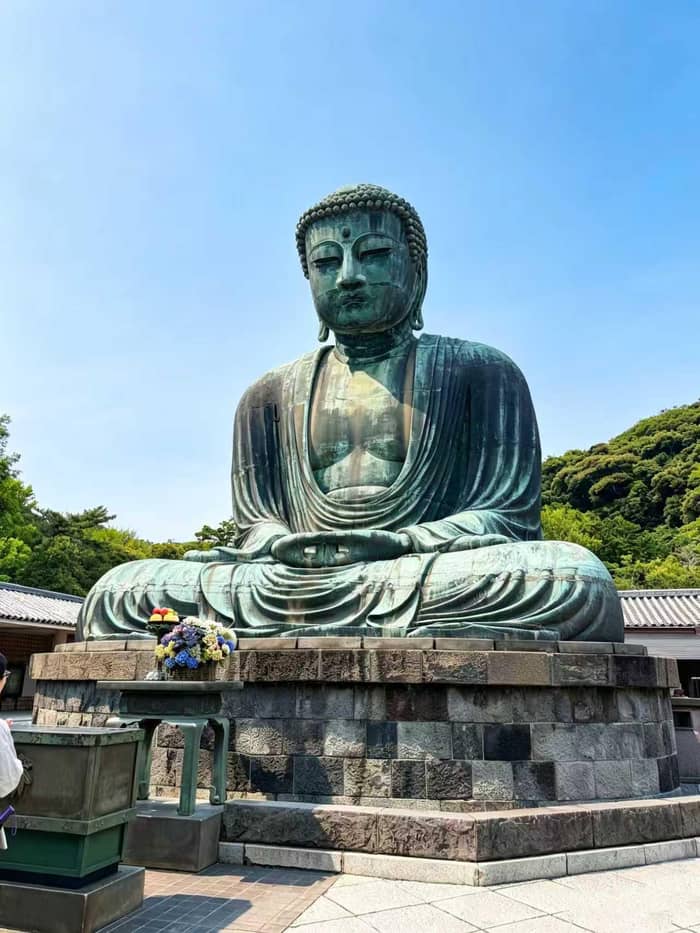
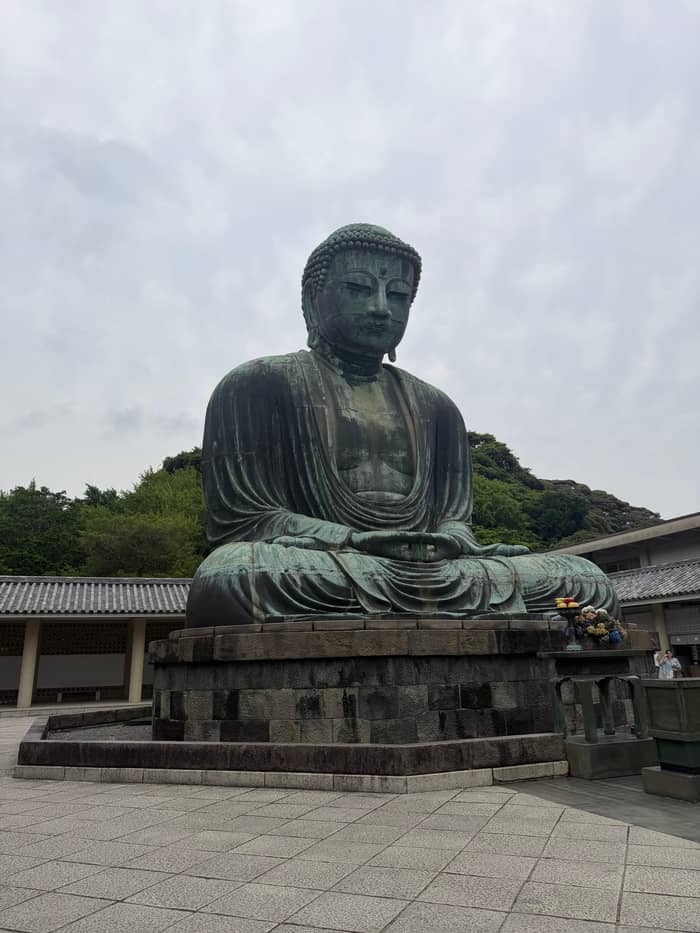
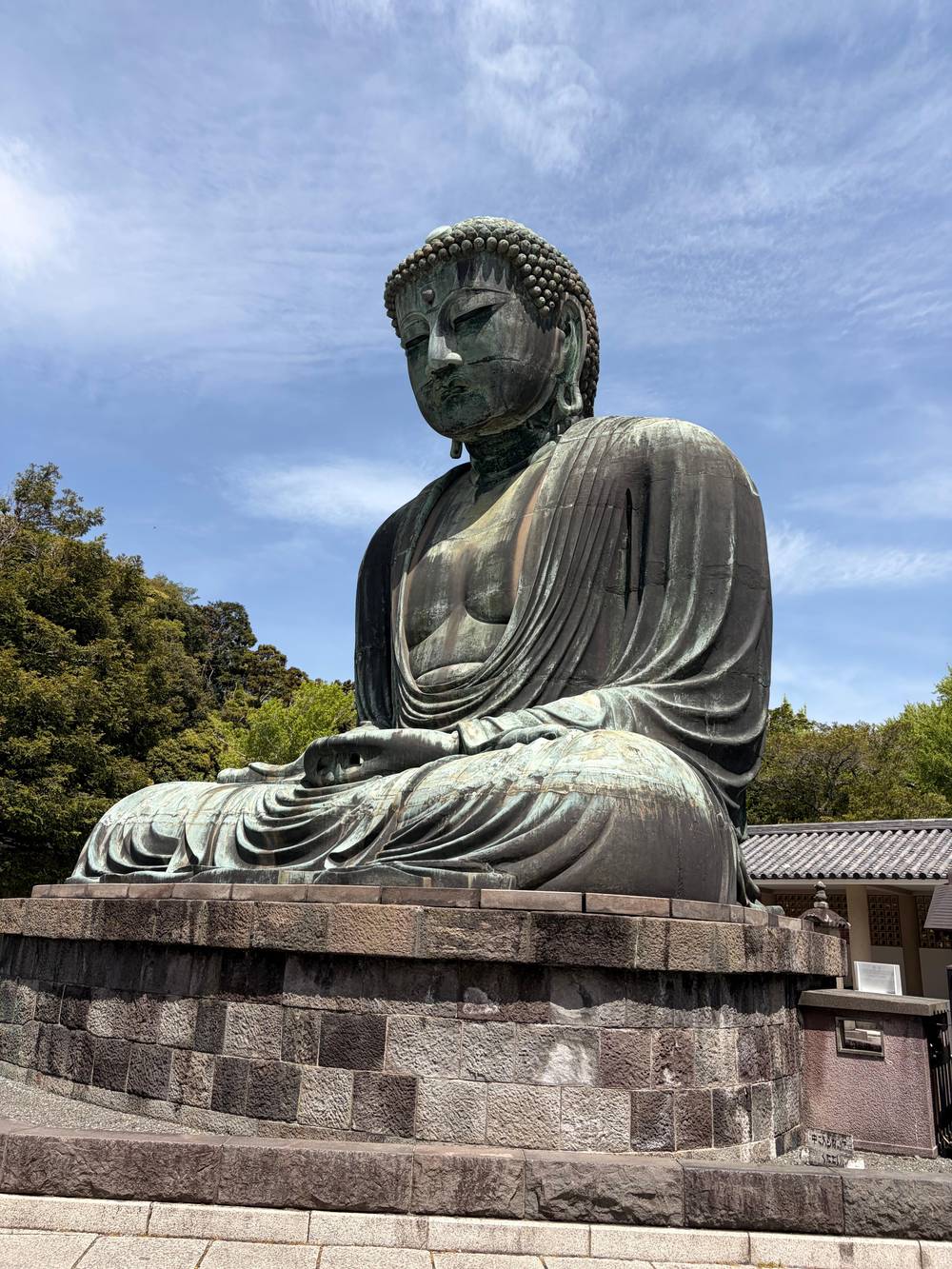
The Great Buddha sits in the open air, a National Treasure about 11.3 meters tall.
Google MapsEleven-headed Kannon, 9.18 meters tall, with a sea-view platform on the upper ground.
Google MapsA spring where crowds wash money; a 20-minute walk from Kamakura Station.
Reached through dozens of red-bannered torii gates and a flight of stairs.
Enshrines the court noble Hino Toshimoto, who died in 1332; 25 minutes on foot from Jochiji.
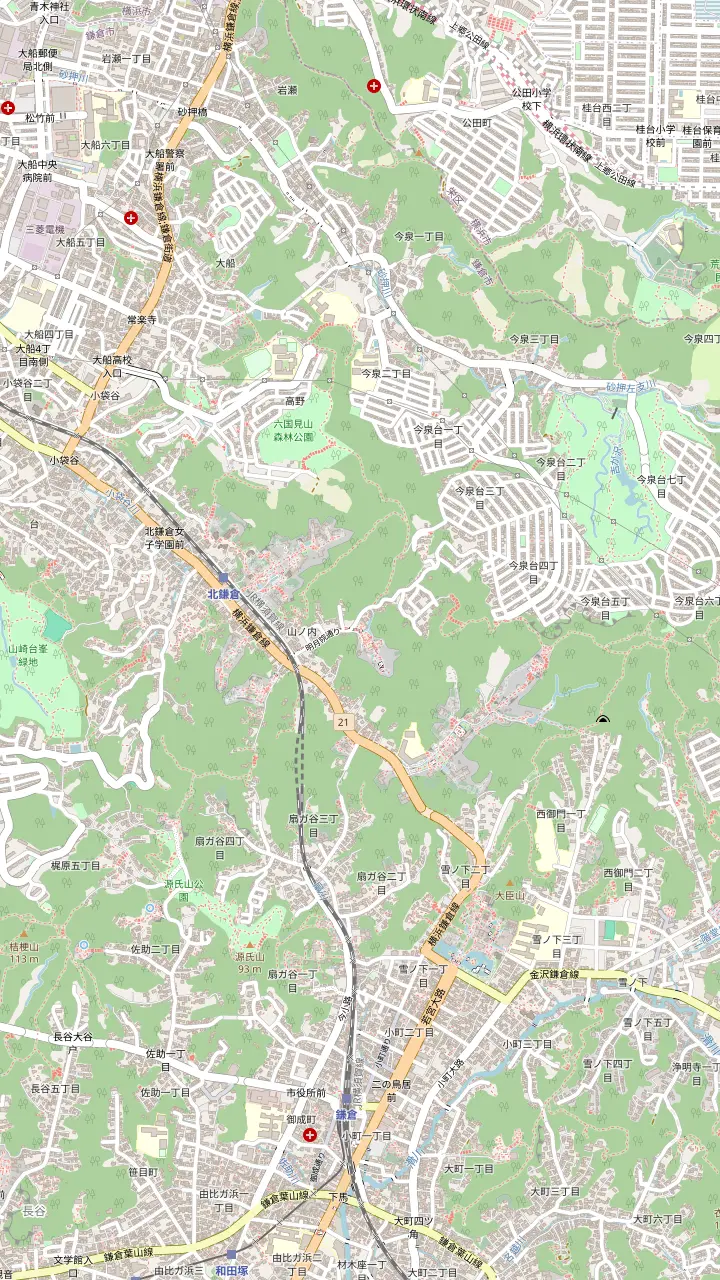
Station for Engakuji, a 1-minute walk away, and for Jochiji.
Founded in 1282; open 8:30 to 16:30 from March to November, admission 500 yen for adults.
Built in 1281; open 9:00 to 16:30, admission 200 yen for adults.
About 2,500 hydrangeas draw visitors to the Kita-Kamakura temples in June.
Ranked first among the Kamakura Gozan; open 8:30 to 16:30, adults 500 yen, cash only.
About 240 steps up from the temple grounds, lined with tengu statues.
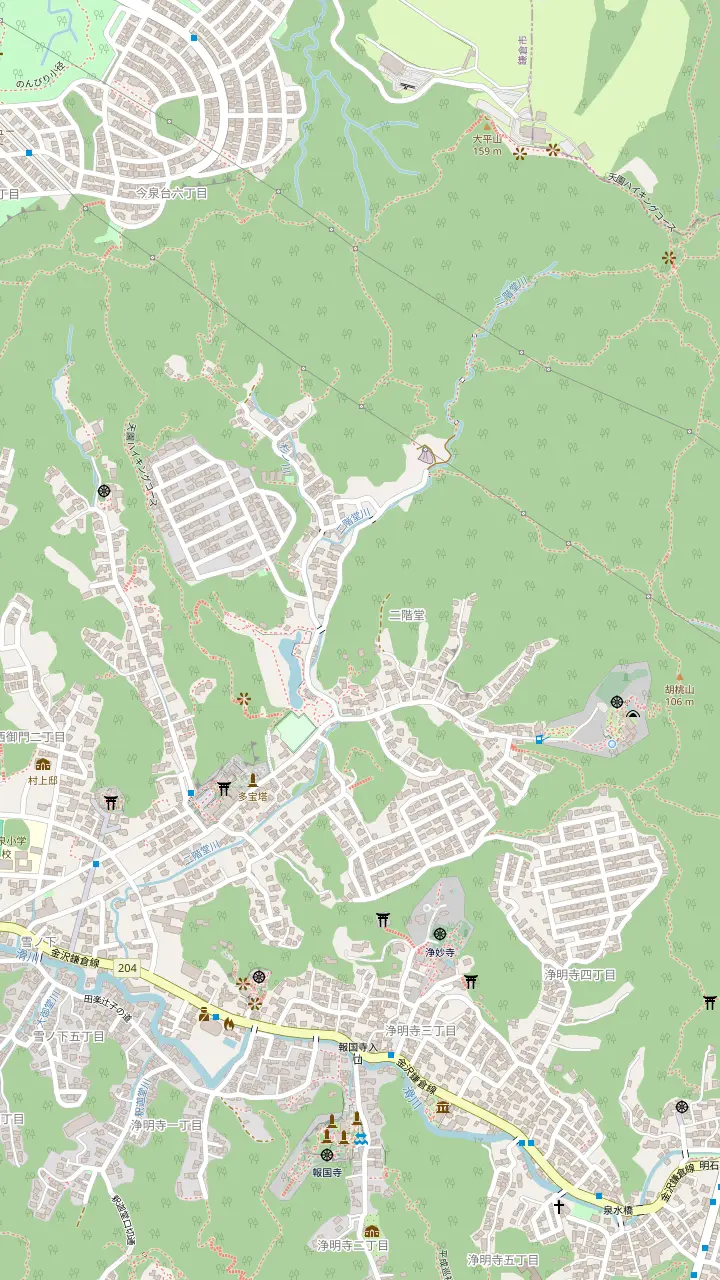
Bamboo garden open 9:00 to 16:00; admission 400 yen, matcha 600 yen.
Rock garden and matcha; open 9:00 to 16:30, adults 100 yen.
A shortcut entrance that climbs about 20 minutes to the Imaizumidai junction.
The highest point of the course at 159.2 m; its one toilet is about five minutes below.
The Tenen course ends at its gate; the stone garden is a Place of Scenic Beauty.
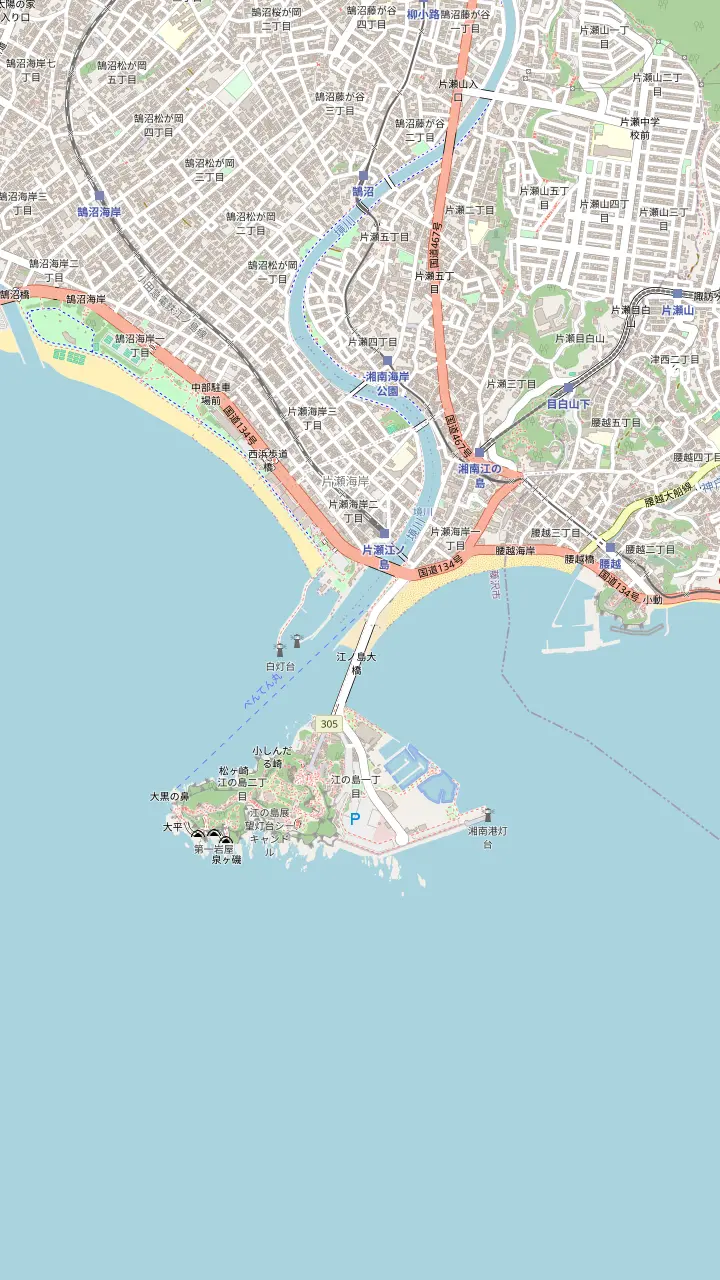
The Odakyu station; the garden is about 20 minutes on foot from here.
Google MapsThe Sea Candle site gives about 25 minutes on foot from here.
Google MapsThe bronze torii stands just past the bridge, and the Benten-maru boat leaves from its foot.
Three shrines make up Enoshima Shrine, first built in 552; the Hoanden hall costs 200 yen for adults.
Google MapsJapan's first outdoor escalator, opened in 1959; a ticket for all sections costs 500 yen for adults.
Google MapsThe tower is 59.8 meters tall and costs 800 yen for adults; the Samuel Cocking Garden around it is free until 17:00.
The third of the three shrines that together form Enoshima Shrine.
Two caves, 152 meters and 56 meters deep, open 9:00 to 17:00 and 500 yen for adults.
A bright light over Enoshima is said to have saved the monk Nichiren here in 1271.
Built as the sailing venue for the 1964 Tokyo Olympics, with around 1000 yachts moored.
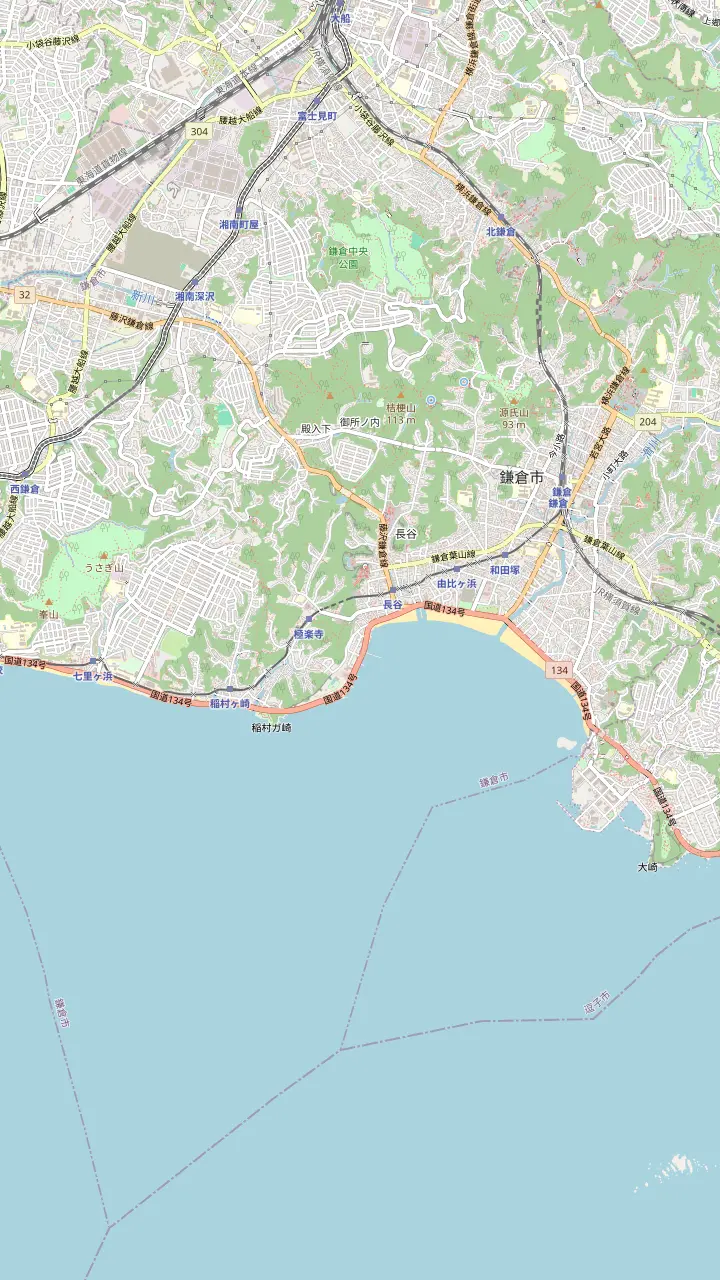
Slightly less crowded than Yuigahama, with a two-minute walk from the Zaimokuza bus stop.
A 15-minute walk from Kamakura Station and 5 minutes from Hase Station.
An Enoden station within 5 minutes on foot of Yuigahama, like Yuigahama and Hase stations.
A cape between Yuigahama and Shichirigahama, free to visit; about 30 minutes is enough.
Popular with surfers throughout the year and known for Mount Fuji views at sunset.
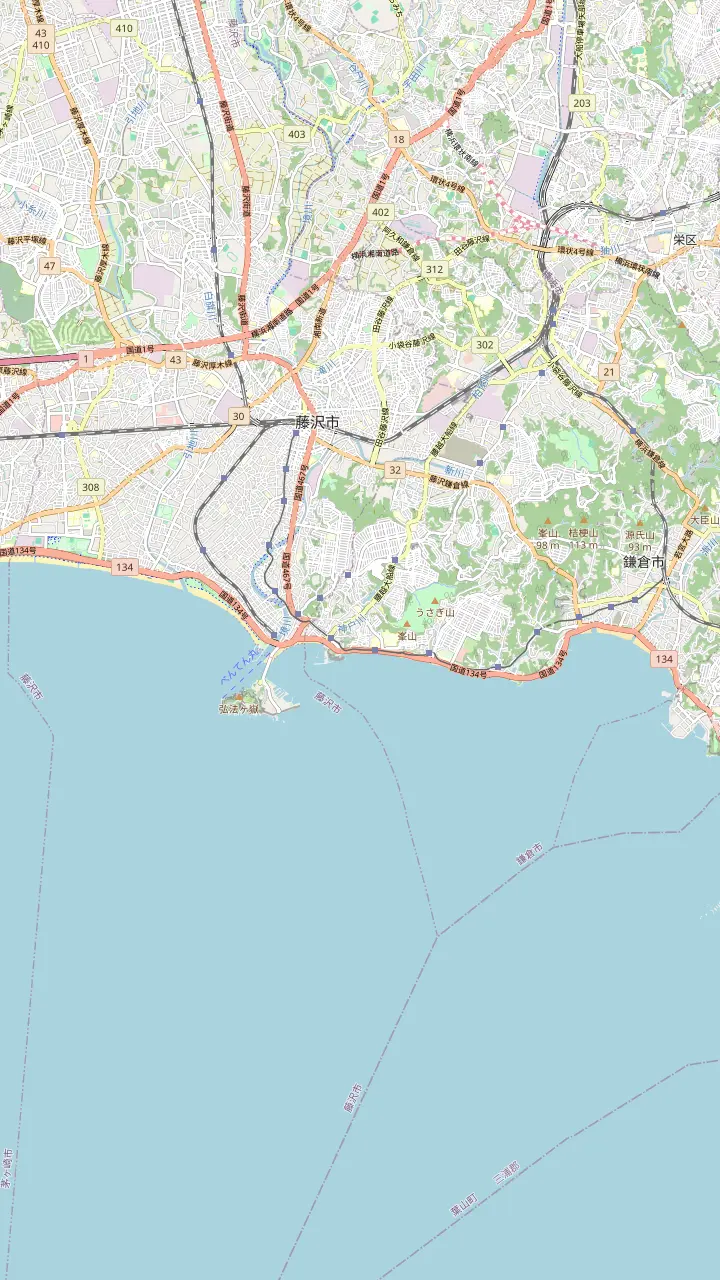
A coastal area that, like Yuigahama and Shichirigahama, draws large numbers of tourists.
Next station along; staff are on hand only from 9:00 to 18:00.
Unmanned station EN08 beside the railway crossing; no restrooms.
A three-minute walk from Koshigoe Station; the harbor shop sells fresh fish.
In 2026 open for swimming from July 1 to September 6; the Tenno-sai sea procession began here at 11:00.
In 2026 open from July 1 to September 13; the Enoshima fireworks were launched from here at 19:40.
Base map: © OpenStreetMap contributors (ODbL)
Tsurugaoka Hachimangu is the shrine Yoritomo set at the head of his capital. Here are its hours, the walk from the station, what to see on the grounds and which dates to plan around.
Editorial team, kamakuradaytrip.quest · Updated November 1, 2026 · A 6-minute read
Facts first
Tsurugaoka Hachimangu is the shrine at the head of Kamakura's central avenue, and most people who come to Kamakura end up here whether or not they planned to. The Tsurugaoka Hachimangu shrine in Kamakura is a Shinto shrine, not a temple, and it belongs to a large family: the shrine itself says there are more than 40,000 shrines dedicated to the kami Hachiman in Japan.5 This one matters because of who placed it here. In 1180 Minamoto Yoritomo set up the base of the shogunate in Kamakura and, in the same year, moved the shrine of his ancestors to its present site.3
The kami enshrined here are Emperor Ojin, Empress Jingu and Himegami.6 For a visitor the names matter less than the setting. The grounds climb from the avenue to a hillside hall, and the whole arrangement was built to be seen. The shrine describes itself as the spiritual and social center of eastern Japan in the shogunate's day, and you are walking through the place where the samurai capital kept its ceremonies.7
That history is why the shrine is worth a stop even if shrines are not your thing. The shogunate held horseback archery, sumo and bugaku in these grounds, and the shrine says those traditions have been carried on to this day.7 Nothing needs booking. The gate is open every day of the year from 6:00 to 20:00, and you can fit a visit around any other plan for the day.1
At a glance
| Place | What it is | Hours or date | Good to know |
|---|---|---|---|
| Gate | The grounds | 6:00 to 20:00 | Open all year |
| Museum | Art and Kamakura culture | 10:00 to 16:30 | Closed Mondays |
| Treasure Hall | Shrine treasures | 9:00 to 16:00 | Closes between displays |
| Cafe | Museum cafe | 10:00 to 17:00 | Last order 16:30 |
| Tea house | Tea and sweets | 10:30 to 17:00 | Open year round |
| Archery path | Yabusame Baba | September 16 | Once a year |
Hours as published on the shrine's own access and festival pages.1,13,14,4
From the east exit of JR Kamakura Station it is a 10-minute walk to the shrine, and the walk from Enoden Kamakura Station takes the same time.2 Trains from Tokyo reach Kamakura on the JR Yokosuka line, and the Hokokuji temple's access page puts Tokyo Station about 60 minutes away and Shinjuku about 53 minutes away on the Shonan-Shinjuku line.15 That makes the shrine easy to reach as the first stop of a day trip.
The walk is part of the visit. It follows the upper end of Wakamiya Oji, a straight 2 km pathway that runs from Yuigahama Beach to the shrine and was modeled on Suzaku Oji in Kyoto.8 Walk it rather than taking a taxi: the avenue runs straight at the shrine, and the approach shows you the hillside bit by bit.
If you would rather not manage trains, the day trip this site sells lists Tsurugaoka Hachimangu as its first stop after the start, followed by Komachi Street, Hase-dera, Kotoku-in and Enoshima. It runs 9 to 9.5 hours and is priced from $51, with free cancellation and reserve now and pay later. Our guide to Komachi Street covers the food stalls that sit beside the avenue.
A walk through the grounds
From the station
About 10 minutes from the east exit of JR Kamakura Station.2
Along the avenue
A straight 2 km path from the beach, modeled on Kyoto's Suzaku Oji.8
At the ponds
Three islands in one pond and four in the other.9
In the gardens
Up the steps
A panoramic view of Kamakura from the top.12
Before you leave
Near the entrance lies Genpei Pond, a pair of ponds that face each other as they did in the Genpei period: the Genji Pond with three islands standing for birth and prosperity, and the Heike Pond with four islands standing for decline.9 Cherry blossoms frame the water in spring and red and white lotus fill it in summer.9 On an island in the Genji Pond stands the Hataage Benzaiten Shrine.11
Beside the Genji Pond is the Peony Garden, one of the shrine's gentler corners, a strolling garden that fills with visitors when the New Year's peonies and the spring peonies are in bloom.10 The oldest building in the grounds is the Maruyama Inari Shrine, wrapped in red flags left by people wishing for good fortune; it dates from the Muromachi period.16 The main shrine and the Wakamiya are both designated nationally important cultural properties.17
The Great Stone Steps are one of the symbols of the shrine, and the climb pays off with a panoramic view of Kamakura and, on clear days, the Pacific Ocean and Izu Oshima Island.12 Look for the young ginkgo tree nearby, a good excuse to slow down before the climb. The great ginkgo that watched over the shrine was toppled by strong winds on March 10, 2010, and a shoot, the child tree, now grows next to the place where the parent stood.18
Decision helper
Choose by what you came to see
If I only have time for a quick stop
The stone steps
The top gives a panoramic view of Kamakura and, on clear days, the ocean.12
If I want to see samurai tradition
Come on September 16
Yabusame is held on the path through the grounds on that date every year.4
If I enjoy gardens and ponds
Genpei Pond and peonies
The ponds have lotus in summer, and the Peony Garden blooms at New Year and in spring.9,10
If It is a Monday
Treasure Hall and grounds
The museum is closed on Mondays, but the gate and Treasure Hall keep their hours.13
If I want the whole of Kamakura in one day
A day trip with a guide
The listed day trip opens with this shrine and goes on to the temples and Enoshima.
Ways to visit
Quiet start
Before the museum opens
Between walks
Museum, hall and cafe
Annual festival
September 14 to 16
Some dates change what you will see. Every year on September 16 the Yabusame ritual takes place along the Yabusame Baba, the path that runs east to west through the grounds.4 A rider on horseback shoots at 3 targets, and the shrine traces the ritual to the Kamakura period (1185-1333), when Yoritomo prayed for peace and tranquility.80
Yabusame belongs to the shrine's annual festival, which runs for three days, September 14 to 16.79 If you want to watch the archery, plan the whole day around it and arrive early, because a ritual held in the middle of the grounds draws a crowd to a narrow path. If you only want a quiet look at the shrine, choose any other date, and give yourself the early hours when the gate is already open and the paths are empty.
The other big date is New Year. The New Year's Day festival is held at 5:00 a.m. at the start of the year.81 During this season the shrine offers the hamaya, an arrow-shaped lucky charm, which takes its name from the national treasure known as the Black Lacquer Arrow.82 For a calm visit, an ordinary morning works well, since the gate opens at 6:00.1
Cost calculator
Type your group size to price three days that include the shrine.
Weigh up 3 choices
Type your group size to price three days that include the shrine.
≈
View≈
View≈
ViewStarting prices from GetYourGuide, converted at the ECB reference rate; the booking page shows the exact sum.
The Kamakura Bunkakan Tsurugaoka Museum sits in the grounds. It opened in 2019, succeeding the Museum of Modern Art Kamakura, which closed in 2016.21 It is open from 10:00 to 16:30 and closed on Mondays, during exhibition changeovers and over the New Year period.13 A Monday visit therefore means the museum is shut even though the shrine is not, which is worth knowing before you arrange the day. On a Monday, spend the time on the grounds and the Treasure Hall instead.
The shrine's Treasure Hall is open from 9:00 to 16:00 and has no regular closing day, though it closes while exhibits are replaced.13 It holds the shrine's historical documents and sacred treasures, and is the place to see what lies behind the shrine's link to the samurai. The museum cafe shows part of the great ginkgo that fell in 2010.18
For a rest, the museum cafe is open from 10:00 to 17:00 with last order at 16:30, and the tea house Kaze no Mori is open from 10:30 to 17:00 all year.14 Both close earlier than the gate. If you arrive late in the afternoon, treat the grounds as the main event and the cafe as a bonus, and bring a drink of your own.
Video
rena_ukulele japan on YouTube · YouTube stays silent until you press play.
On days when the air is clear, you can see the Pacific Ocean and Izu Oshima Island.
Checklist
Tsurugaoka Hachimangu works best as the hinge of the day. Hase-dera and the Great Buddha lie west of the center and are reached by train, while the Zen temples of Kita-Kamakura and the bamboo garden lie in other directions. Our page on things to do in Kamakura lays out how those areas connect, and the page on the bamboo garden covers the temples.
Mind the closing times; the shrine and the temples do not share them. Hokokuji closes its gate at 16:00 while the shrine gate stays open until 20:00, which is worth remembering when you plan the order of the day.40,1 A sensible pattern is the temples first and the shrine as the last stop of the afternoon, then a walk back down the avenue to the station.
If you prefer a guide who sets the pace, a walking tour in the listings starts here and moves on to Komachi Dori, the train, Kotoku-in and Hase-dera in 3.5 hours. The same shrine opens the longer day trip with Enoshima. Either way, leave time to stand at the top of the steps and look at the view.
FAQ
The gate opening and closing times are the same every day of the year; the museum, Treasure Hall and cafes keep shorter hours.1
The walk starts at the east exit of JR Kamakura Station; the walk from Enoden Kamakura Station also takes 10 minutes.2
The shrine names Emperor Ojin, Empress Jingu and Himegami as the three kami enshrined here.6
It also closes during exhibition changeovers and over the New Year period; if Monday is a national holiday it is open.13
The museum cafe is open 10:00 to 17:00 (last order 16:30) and the tea house Kaze no Mori 10:30 to 17:00.14
The shrine says clear days reveal the Pacific Ocean and Izu Oshima Island.12
The listing names Tsurugaoka Hachimangu first among its stops after the start, then Komachi Street, Hase-dera, Kotoku-in and Enoshima.
Sources
Questions about the Kamakura trip? We reply in minutes.