Easy start
Shrine and street
Around Kamakura Station
- Walk to shrine10 minutes
- Street shopsAbout 250
- Gate hours6:00 a.m. to 8:00 p.m.
Guides
Language
Currency
Check open daysstarting at $51 · plans can change freeWhere things are
In one line
Kamakura's main things to do are Tsurugaoka Hachimangu, the Zen temples, the Great Buddha, Hase-dera and Enoshima, all within a day trip from Tokyo.
Three things to note
44 places to see
Choose an area, then touch a pin or a name for a short note and directions.
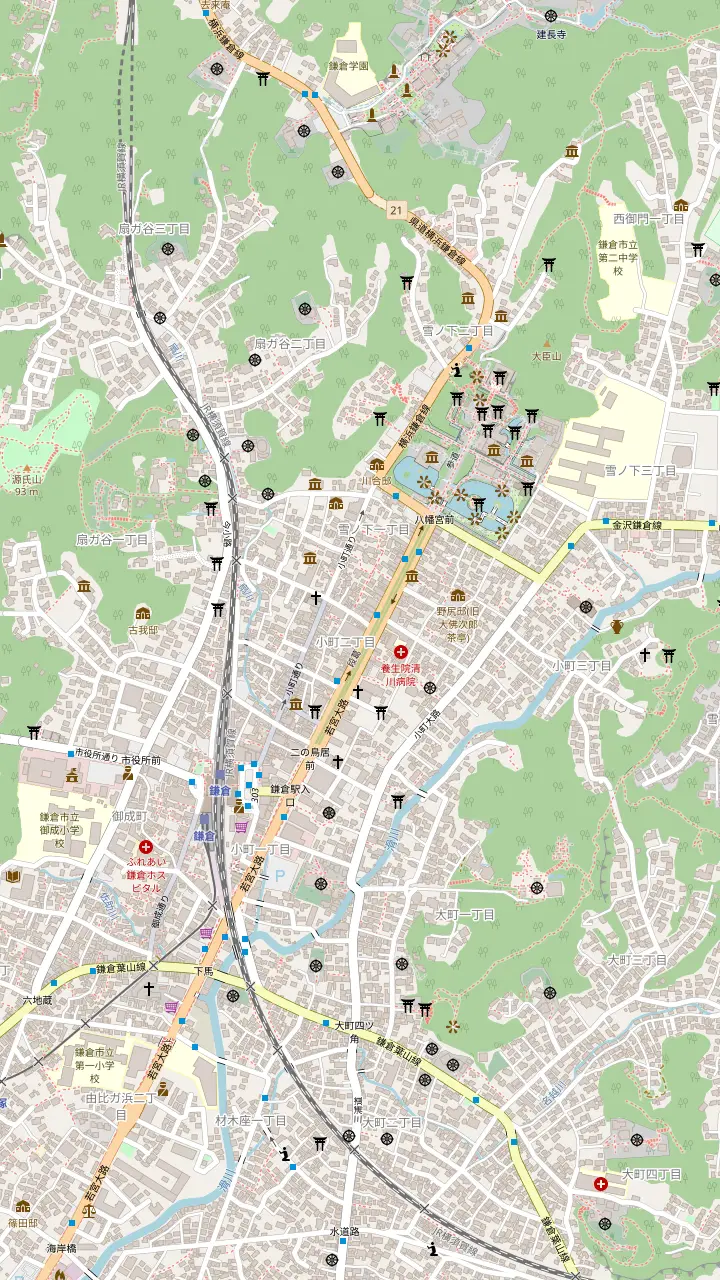
JR Kamakura Station: the shrine is a 10-minute walk from its east exit.
Starts 2 minutes on foot from the east exit and runs to the shrine, with about 250 shops.
Google MapsA straight 2 km pathway from Yuigahama Beach to the shrine, modeled on Suzaku Oji in Kyoto.
The Genji Pond has three islands and the Heike Pond four; lotus blooms here in summer.
Shrine moved here by Yoritomo in 1180; the gate is open 6:00 to 20:00 all year.
Google MapsMuseum opened in 2019; open 10:00 to 16:30 and closed on Mondays.
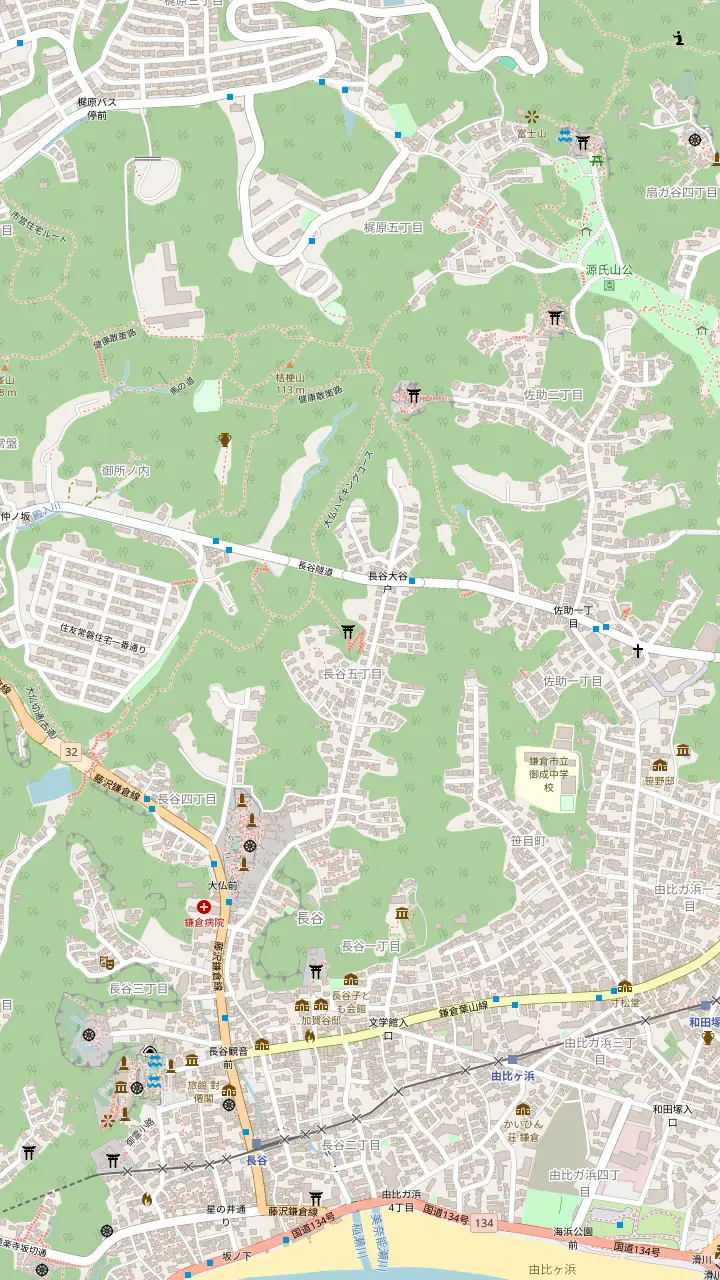
Enoden stop; the Great Buddha is a 7-minute walk and Hasedera Temple a 5-minute walk.
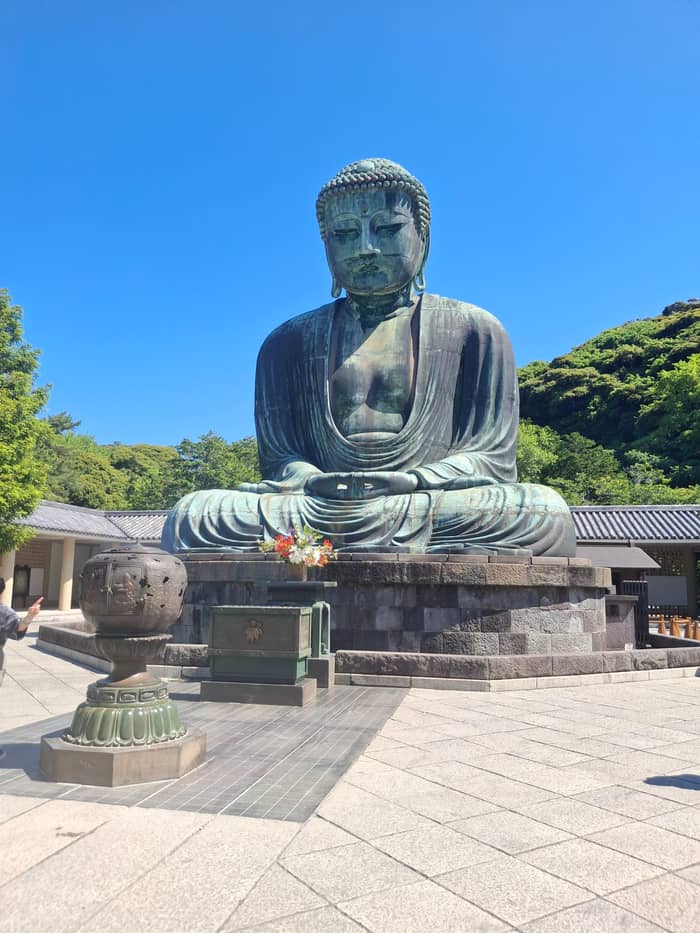
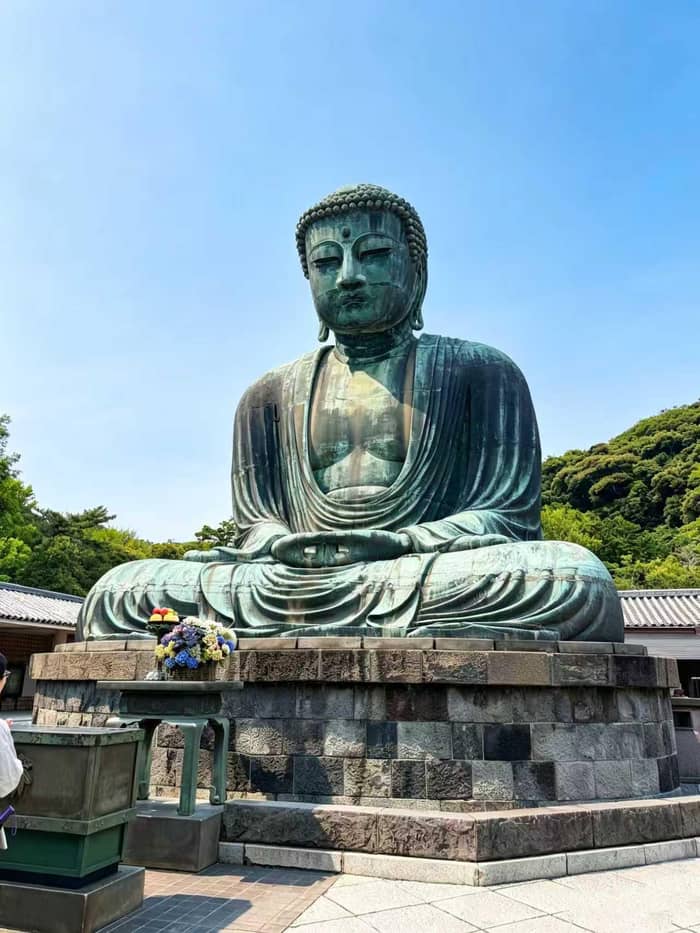
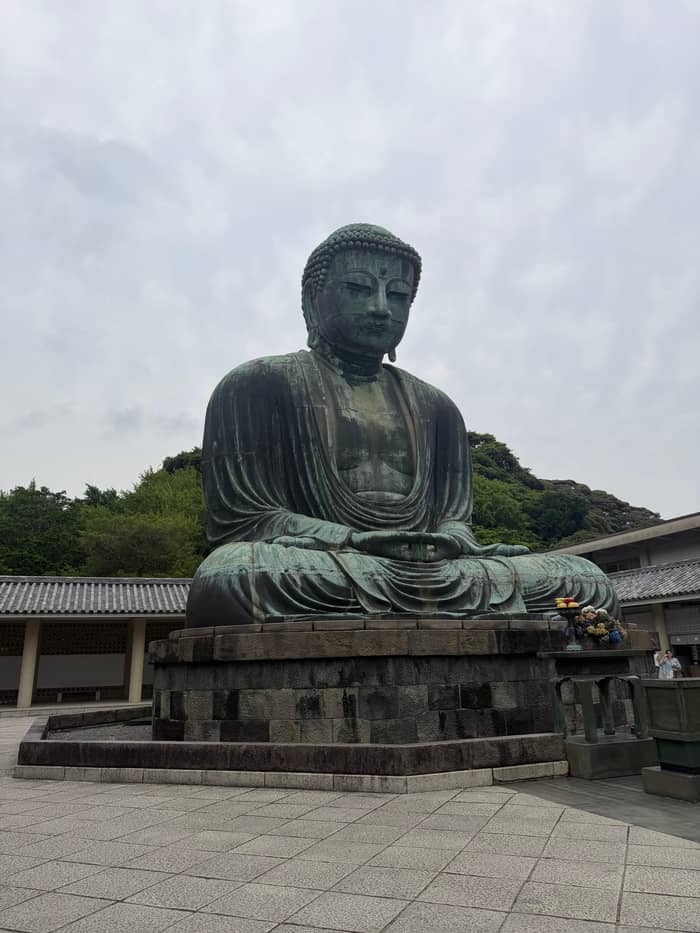
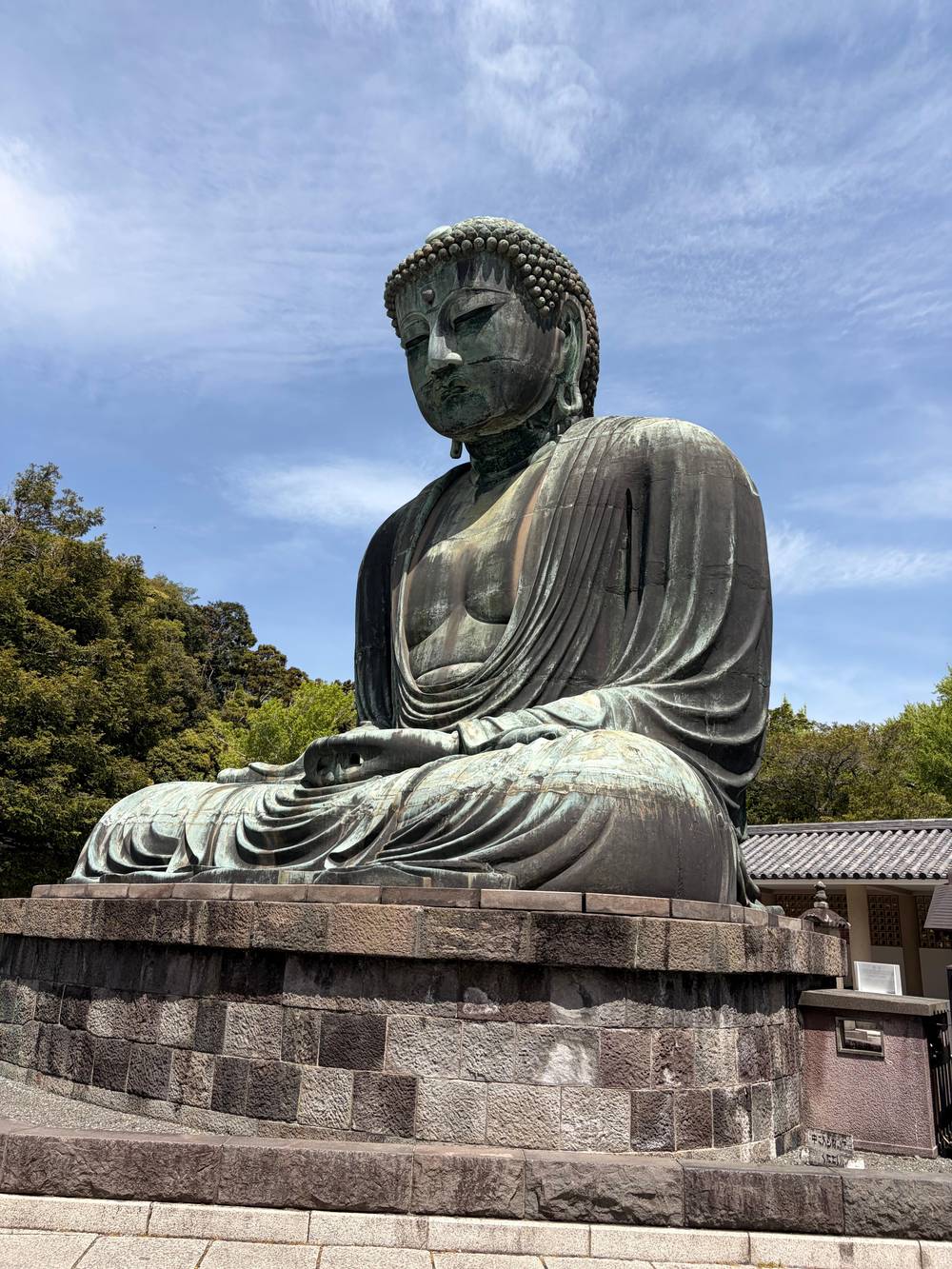
The Great Buddha sits in the open air, a National Treasure about 11.3 meters tall.
Google MapsEleven-headed Kannon, 9.18 meters tall, with a sea-view platform on the upper ground.
Google MapsA spring where crowds wash money; a 20-minute walk from Kamakura Station.
Reached through dozens of red-bannered torii gates and a flight of stairs.
Enshrines the court noble Hino Toshimoto, who died in 1332; 25 minutes on foot from Jochiji.
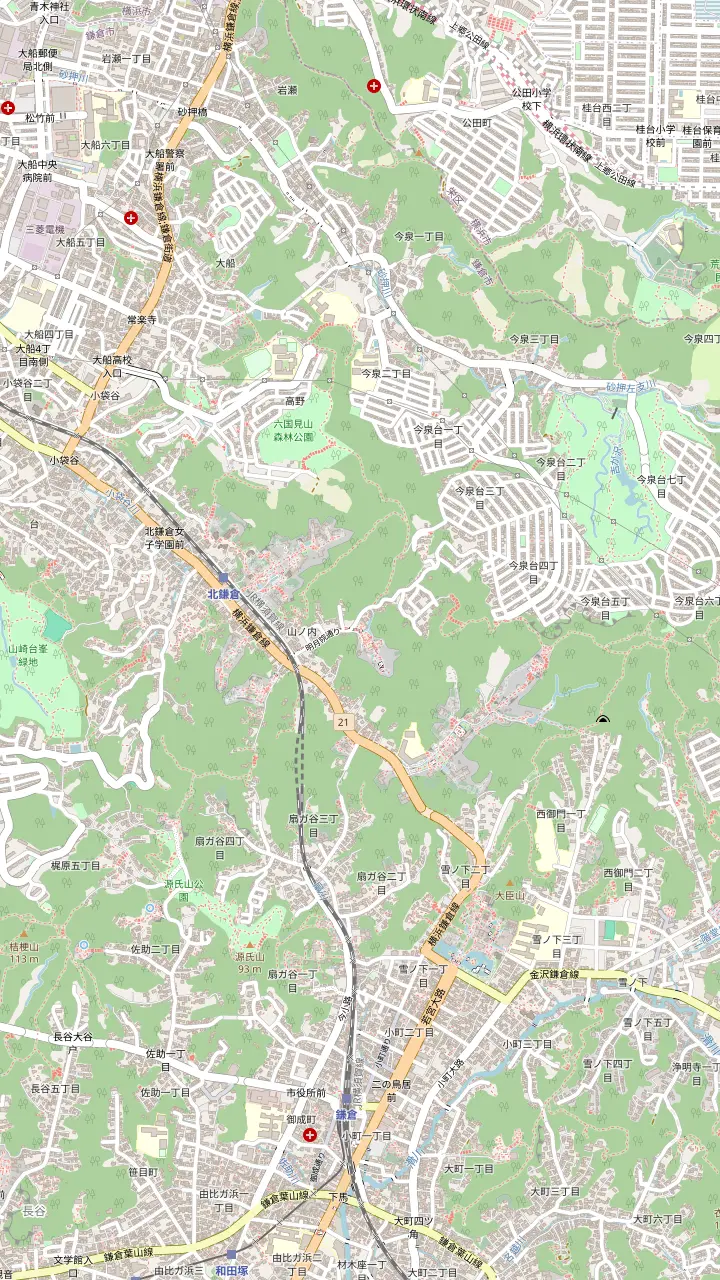
Station for Engakuji, a 1-minute walk away, and for Jochiji.
Founded in 1282; open 8:30 to 16:30 from March to November, admission 500 yen for adults.
Built in 1281; open 9:00 to 16:30, admission 200 yen for adults.
About 2,500 hydrangeas draw visitors to the Kita-Kamakura temples in June.
Ranked first among the Kamakura Gozan; open 8:30 to 16:30, adults 500 yen, cash only.
About 240 steps up from the temple grounds, lined with tengu statues.
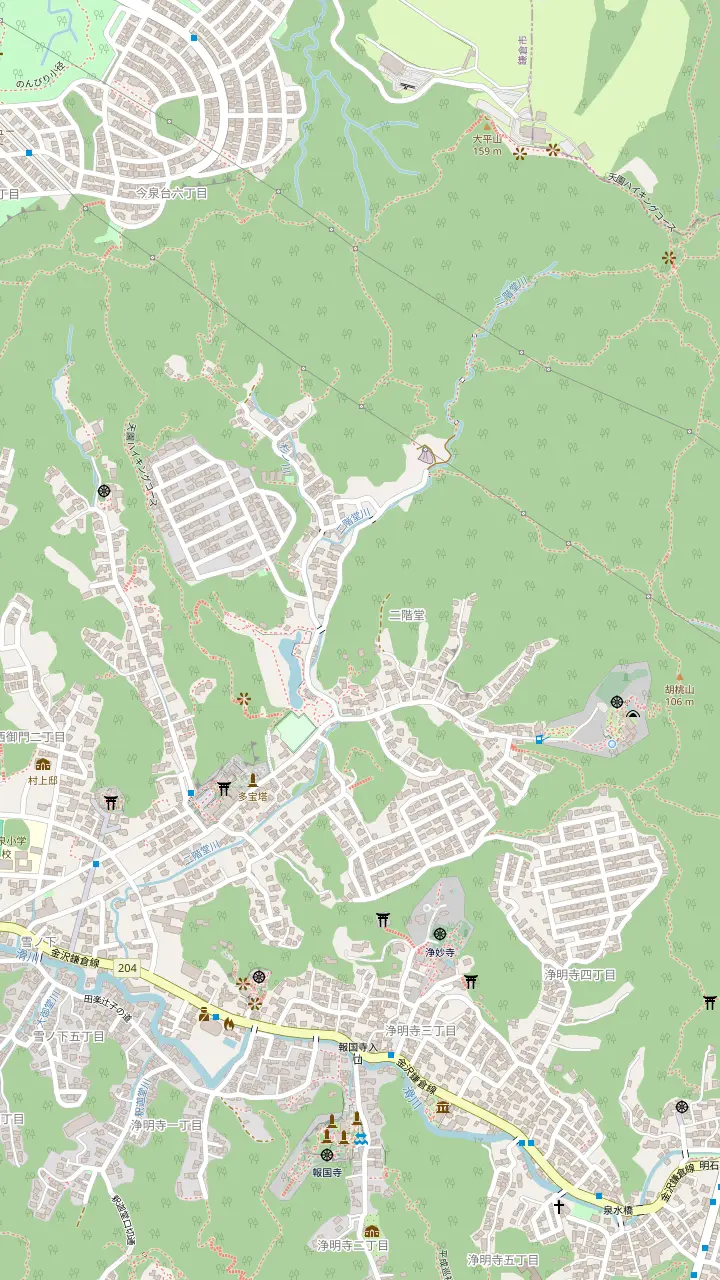
Bamboo garden open 9:00 to 16:00; admission 400 yen, matcha 600 yen.
Rock garden and matcha; open 9:00 to 16:30, adults 100 yen.
A shortcut entrance that climbs about 20 minutes to the Imaizumidai junction.
The highest point of the course at 159.2 m; its one toilet is about five minutes below.
The Tenen course ends at its gate; the stone garden is a Place of Scenic Beauty.
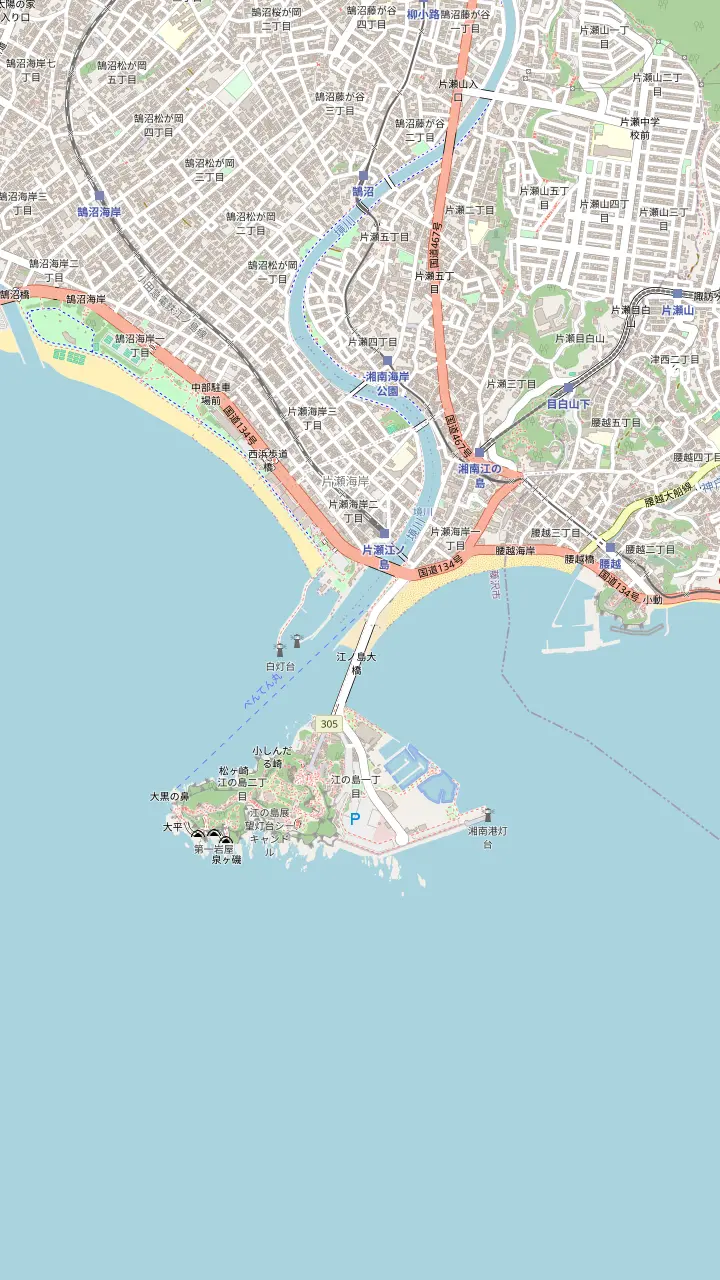
The Odakyu station; the garden is about 20 minutes on foot from here.
Google MapsThe Sea Candle site gives about 25 minutes on foot from here.
Google MapsThe bronze torii stands just past the bridge, and the Benten-maru boat leaves from its foot.
Three shrines make up Enoshima Shrine, first built in 552; the Hoanden hall costs 200 yen for adults.
Google MapsJapan's first outdoor escalator, opened in 1959; a ticket for all sections costs 500 yen for adults.
Google MapsThe tower is 59.8 meters tall and costs 800 yen for adults; the Samuel Cocking Garden around it is free until 17:00.
The third of the three shrines that together form Enoshima Shrine.
Two caves, 152 meters and 56 meters deep, open 9:00 to 17:00 and 500 yen for adults.
A bright light over Enoshima is said to have saved the monk Nichiren here in 1271.
Built as the sailing venue for the 1964 Tokyo Olympics, with around 1000 yachts moored.
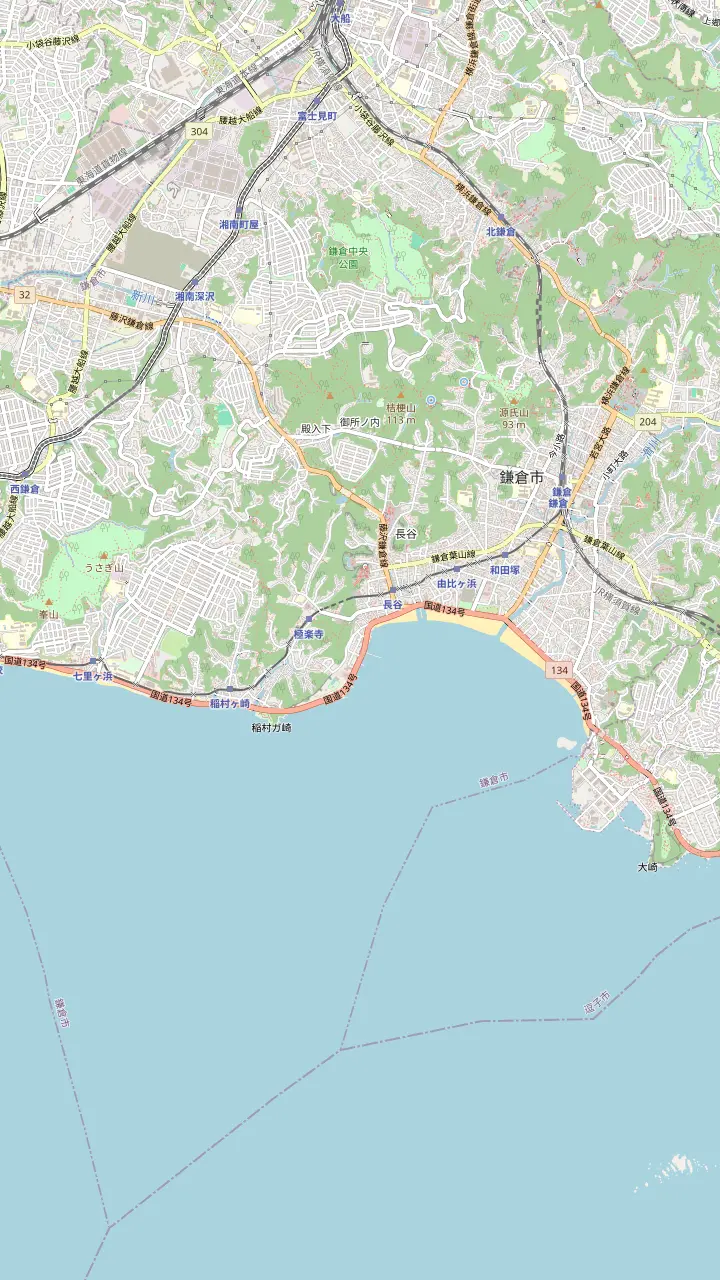
Slightly less crowded than Yuigahama, with a two-minute walk from the Zaimokuza bus stop.
A 15-minute walk from Kamakura Station and 5 minutes from Hase Station.
An Enoden station within 5 minutes on foot of Yuigahama, like Yuigahama and Hase stations.
A cape between Yuigahama and Shichirigahama, free to visit; about 30 minutes is enough.
Popular with surfers throughout the year and known for Mount Fuji views at sunset.
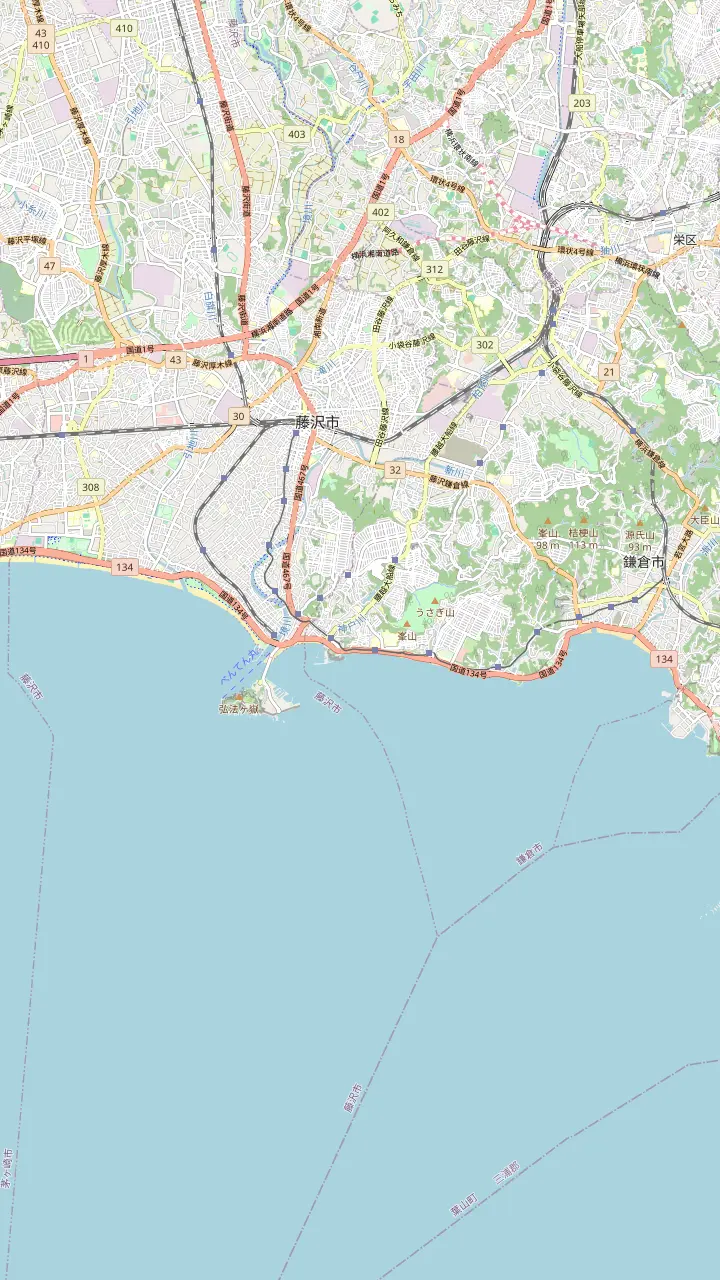
A coastal area that, like Yuigahama and Shichirigahama, draws large numbers of tourists.
Next station along; staff are on hand only from 9:00 to 18:00.
Unmanned station EN08 beside the railway crossing; no restrooms.
A three-minute walk from Koshigoe Station; the harbor shop sells fresh fish.
In 2026 open for swimming from July 1 to September 6; the Tenno-sai sea procession began here at 11:00.
In 2026 open from July 1 to September 13; the Enoshima fireworks were launched from here at 19:40.
Base map: © OpenStreetMap contributors (ODbL)
Kamakura packs a shrine, Zen temples, a giant Buddha, a seaside tram and a beach into one small town. These are the things to do in Kamakura, how the sights group together and how to link them in a day.
Editorial team, kamakuradaytrip.quest · Updated November 1, 2026 · A 7-minute read
Facts first
Kamakura is a small town with a big history. It was the seat of Japan's first samurai government, and the Kamakura period that carries its name is dated 1185 to 1333.9 The town is ringed by hills on three sides and looks out to the sea on the fourth.10 That shape makes a handy mental map: temples sit in the valleys, shrines climb the slopes and the beach waits at the bottom.
From Tokyo Station the JR Yokosuka Line reaches Kamakura Station in about 60 minutes, and from Yokohama Station in about 25.1,11 That puts Kamakura within easy day-trip range, and the sights fall into natural groups: the shrine and shopping street beside the station, the Zen temples around Kita-Kamakura, the Great Buddha and Hase-dera along the Enoden line, and the coast from Yuigahama Beach out to Enoshima.
Plan around the fact that the town is compact. Kamakura's own tourism site says the townscape is concentrated in a relatively small area and that crowding in certain sections has become a challenge.12 Spread your day across the groups above instead of stacking every stop into the lanes between the station and the shrine, and you will meet fewer people at each one.
Sight by sight
| Sight | Getting there | Fee | Hours |
|---|---|---|---|
| Tsurugaoka Hachimangu | 10 minutes from the station | Treasure Hall 200 yen | Gate 6:00 a.m. to 8:00 p.m. |
| Engaku-ji | 1 minute from Kita-Kamakura | 500 yen | 8:30 to 4:30 (March to November) |
| Kenchoji | 15 minutes from Kita-Kamakura | 500 yen | 8:30 to 4:30 |
| Kotoku-in | 7 minutes from Hase Station | 300 yen | 8:00 to 5:30 (April to September) |
| Hase-dera | Hase district | 400 yen | 8:00 to 5:30 (April to June) |
| Sea Candle | 25 minutes from Enoshima Station | 800 yen | Garden 9:00 a.m. to 8:00 p.m. |
From the Kamakura City Tourist Association, each temple's own site and the Sea Candle site; all fees are for adults.20,21,26,4,31,13,28,14,2,32,16,3,17,33,29,34,35
The shrine and the shopping street form one straight line. Komachi Street starts 2 minutes on foot from the east exit of Kamakura Station6 and runs parallel to Wakamiya-oji all the way to Tsurugaoka Hachimangu.19 The shrine itself is a 10-minute walk from that same exit.20 Its gate opens at 6:00 a.m. and closes at 8:00 p.m.,21 which leaves room for an early walk up the approach before the shops open.
Visit Kanagawa counts about 250 shops along Komachi Street,5 and JNTO gives the length as about 350 meters.22 JNTO also quotes a calculated 18 million people a year and calls the street frequently crowded, though by day it is traffic controlled and left to pedestrians.23,24 If the crush is too much, its tip is to slip through an alley to Wakamiya-oji, which leads on to the shrine.25
The shrine's Treasure Hall charges 200 yen for an adult.26 In September the shrine holds its annual festival, where yabusame horseback archery is performed,27 which is worth timing a visit around if you can. Our Tsurugaoka Hachimangu page goes deeper into the grounds, and the Komachi Street food page covers what to eat along the way.
Engaku-ji sits a 1-minute walk from JR Kita-Kamakura Station13 and charges 500 yen for adults.4 Its Shariden Reliquary Hall is listed as a National Treasure.36 Opening hours run from 8:30 to 4:30 between March and November and from 8:30 to 4:00 between December and February.31 In winter, plan an earlier arrival.
Kenchoji ranks first among Kamakura's Five Great Zen Temples and also charges 500 yen for adults.28 It is about 15 minutes on foot from Kita-Kamakura Station toward Kamakura Station.14 Visit Kanagawa strings Engaku-ji, Meigetsu-in, Kenchoji, Tsurugaoka Hachimangu and Komachi Street into a single walking route, with listed times of 30 minutes, 1 hour, 45 minutes, 1 hour and 40 minutes.15
In June about 2,500 hydrangeas draw visitors to the Kita-Kamakura temples, and those at Meigetsu-in are all one uniform blue.37 The rainy season spans June and July, so pack an umbrella alongside the camera.7 Our page on the bamboo forest and Zen temples gives the full story of these quiet gardens.
Decision helper
Choose by how much time you have and what you came to see
If Only a few hours here
Shrine and Komachi Street
The shrine is a 10-minute walk from the east exit of the station.20
If I want quiet gardens
The Kita-Kamakura temples
Engaku-ji is a 1-minute walk from its station.13
If I want the big names on a budget
Kotoku-in and Hase-dera
If I am here for the sea
Yuigahama or Enoshima
Yuigahama is a 15-minute walk from Kamakura Station.18
If I want no planning
The day tour from Tokyo
Its listed stops are the shrine, Komachi Street, Hase-dera, Kotoku-in and Enoshima.
Kinds of day
Easy start
Around Kamakura Station
On foot
Kita-Kamakura
By tram
Hase by Enoden
The Enoden tram links the next group of sights. Kotoku-in, home of the Great Buddha, is a seven-minute walk from Hase Station.16 Admission is 300 yen for adults and 150 yen for children aged 6 to 12, and going inside the statue costs an extra 50 yen.2,101 The grounds close at 5:30 p.m. from April to September and at 5:00 p.m. from October to March.32
Hase-dera is the other big stop on this stretch. Admission is 400 yen for adults and 200 yen for children aged 6 to 11.3 It stays open until 5:30 p.m. from April to June, with last entry at 5:00 p.m., and until 5:00 p.m. from July to March, with last entry at 4:30 p.m.17 The temple was established in 736 AD to enshrine its Kannon statue, a wooden figure 9.18 meters tall.102
The Enoden's Noriorikun one-day pass is 800 yen for an adult and 400 yen for a child and covers the whole line on the day of issue.30 It also brings benefits at Hasedera, Enoshima Sea Candle and Enoshima Aquarium.103 The Great Buddha page and the Hasedera page on this site cover each stop in more detail.
Cost calculator
Type your group size to price four days across the town.
Weigh up 4 choices
Type your group size to price four days across the town.
≈
View≈
View≈
View≈
ViewStarting prices from GetYourGuide, converted at the ECB reference rate; the booking page shows the exact sum.
A walking day
Morning
A 1-minute walk from Kita-Kamakura Station.13
Mid-morning
About 15 minutes on foot toward Kamakura Station.14
Midday
Listed at 1 hour for the shrine and 40 minutes for the street.15
Afternoon
Kotoku-in is a seven-minute walk from Hase Station.16
Late afternoon
Open until 5:00 p.m. from July to March.17
Evening
5 minutes on foot from Hase Station.18
Yuigahama Beach is a 15-minute walk from Kamakura Station and 5 minutes from Wadazuka, Yuigahama and Hase stations.18 Beaches and the temporary beachfront restaurants known as umi no ie open from July 1 to August 31,104 and temperatures often pass 35°C in July and August.99 Outside that window the temporary restaurants are not set up, but a shoreline stroll after the temples still makes a calm end to the day.
Enoshima is the island at the far end of the Enoden. The Sea Candle observation tower costs 800 yen for an adult and 400 yen for a child,29 the Enoshima Escalator costs 500 yen for adults and 250 yen for children across all its sections,105 and a set ticket covering the garden, the Sea Candle and the escalator costs 1,100 yen for adults.106
The Samuel Cocking Garden's facility hours are 9:00 to 20:00 (8:00 p.m.), with last entry at 19:30, and they vary by facility and event.34 The Sea Candle's own site gives about 25 minutes on foot from Enoshima Station on the Enoden, or about 20 minutes from Katase-Enoshima Station on the Odakyu line.35 Our Enoshima island page and Kamakura beach page cover the coast in full.
Video
Mark Wiens Abroad on YouTube · YouTube stays silent until you press play.
The city is also surrounded by mountains on three sides and looks out to the sea on the fourth
Checklist
Cherry blossoms begin to bloom in April, hydrangeas are in full bloom in June, and the autumn leaves are at their most impressive from late November through early December.107,7,8 In January many people come for hatsumode, the first temple or shrine visit of the year.108 Whatever the month, an early start gives the popular Kamakura attractions a calmer feel.
The city asks visitors to mind the people around them when eating and drinking on the street.109 It also asks you to take your trash with you and to stay quiet and calm at temples and shrines.110 These lines matter most on Komachi Street, where snacks and crowds meet in a narrow space.
If you arrive with bags, the Kamakura City Tourist Association stores luggage at 300 yen per piece with no side over 40 cm and 700 yen for larger pieces.111 The counter is on the 4th floor of the Enoden Building, right outside the west exit of Kamakura Station, and needs no reservation.100 Dropping your bags there frees you to walk the town lightly.
FAQ
From July to March it closes at 5:00 p.m., with last entry at 4:30 p.m.17
It costs 800 yen for an adult and 400 yen for a child, covers the whole line and is valid on the date of issue only.30
The listed stops are Tsurugaoka Hachimangu, Komachi Street, Hase-dera, Kotoku-in and Enoshima.
Sources
Questions about the Kamakura trip? We reply in minutes.