Free to wander
Shrine and shops
Bridge to Zuishinmon
- Hoanden hall200 yen
- Hours8:30 to 16:30
- Shrine builtIn 552
Guides
Language
Currency
Check open daysstarting at $51 · plans can change freeWhere things are
In one line
Enoshima is a small island with a circumference of about 4 km, home to a shrine, the Sea Candle tower and the Iwaya caves, and direct trains from Tokyo take around 1 hour.
The fees on Enoshima
44 places to see
Choose an area, then touch a pin or a name for a short note and directions.
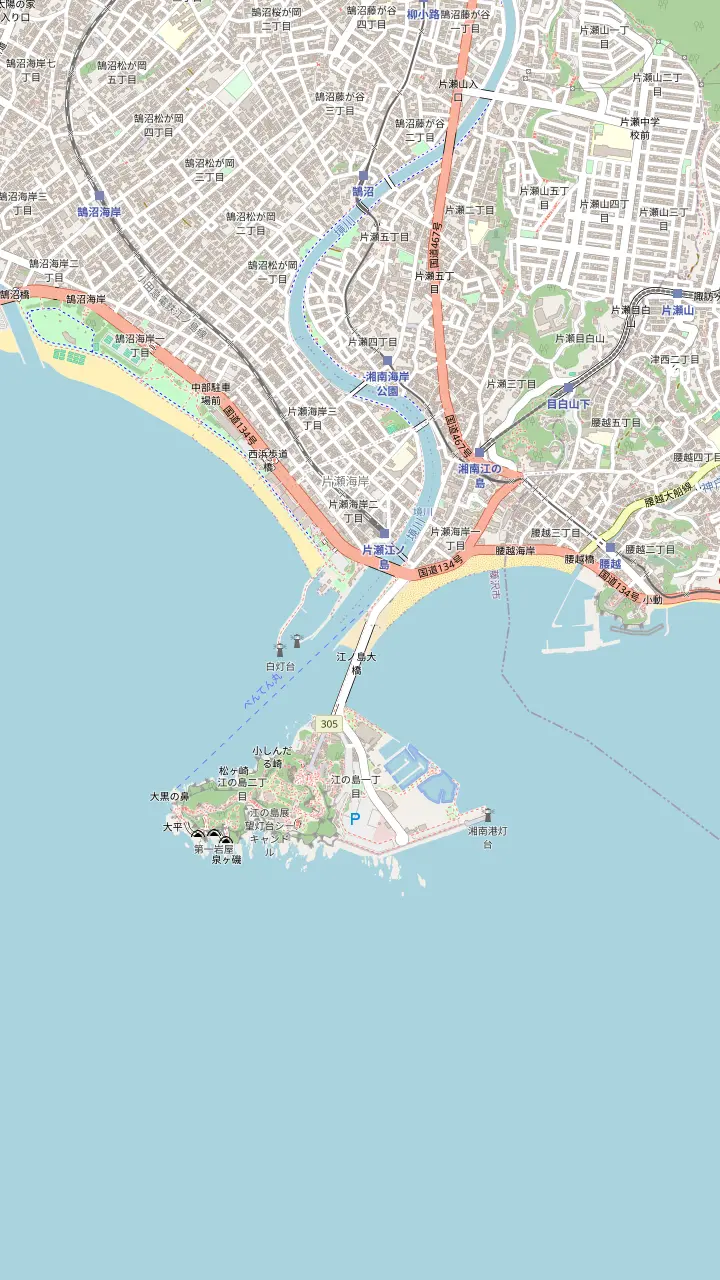
The Odakyu station; the garden is about 20 minutes on foot from here.
Google MapsThe Sea Candle site gives about 25 minutes on foot from here.
Google MapsThe bronze torii stands just past the bridge, and the Benten-maru boat leaves from its foot.
Three shrines make up Enoshima Shrine, first built in 552; the Hoanden hall costs 200 yen for adults.
Google MapsJapan's first outdoor escalator, opened in 1959; a ticket for all sections costs 500 yen for adults.
Google MapsThe tower is 59.8 meters tall and costs 800 yen for adults; the Samuel Cocking Garden around it is free until 17:00.
The third of the three shrines that together form Enoshima Shrine.
Two caves, 152 meters and 56 meters deep, open 9:00 to 17:00 and 500 yen for adults.
A bright light over Enoshima is said to have saved the monk Nichiren here in 1271.
Built as the sailing venue for the 1964 Tokyo Olympics, with around 1000 yachts moored.
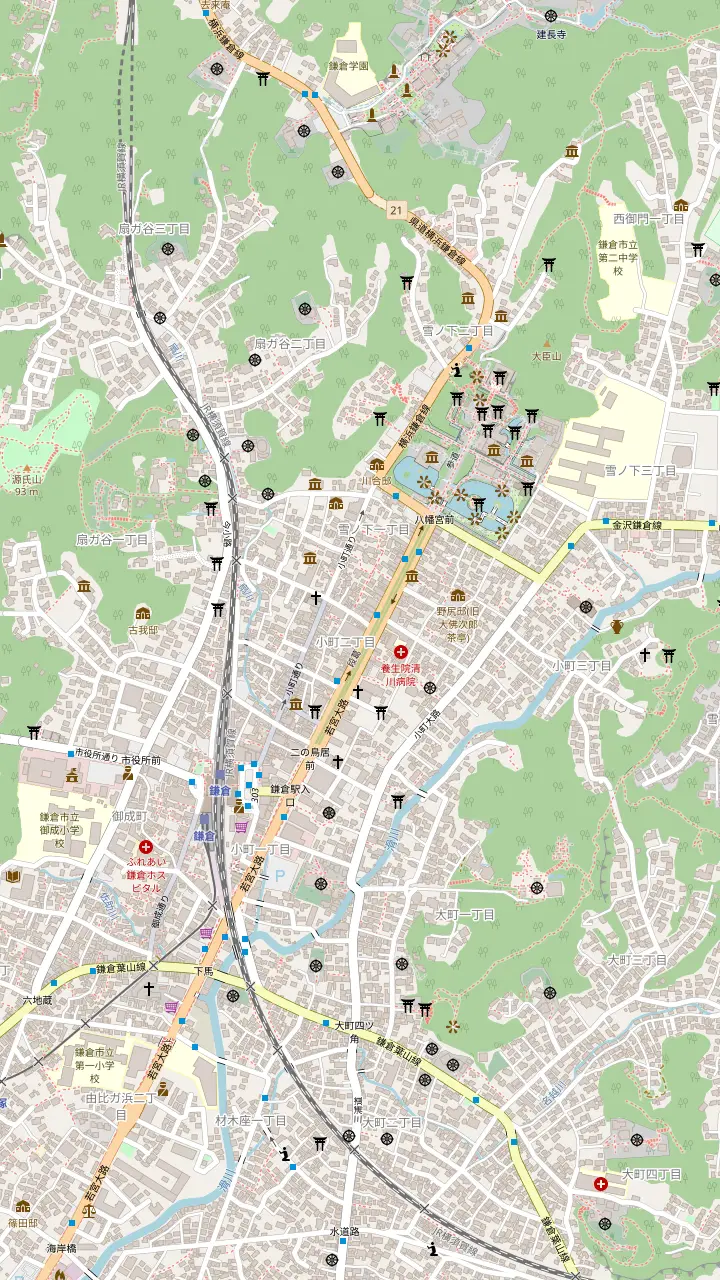
JR Kamakura Station: the shrine is a 10-minute walk from its east exit.
Starts 2 minutes on foot from the east exit and runs to the shrine, with about 250 shops.
Google MapsA straight 2 km pathway from Yuigahama Beach to the shrine, modeled on Suzaku Oji in Kyoto.
The Genji Pond has three islands and the Heike Pond four; lotus blooms here in summer.
Shrine moved here by Yoritomo in 1180; the gate is open 6:00 to 20:00 all year.
Google MapsMuseum opened in 2019; open 10:00 to 16:30 and closed on Mondays.
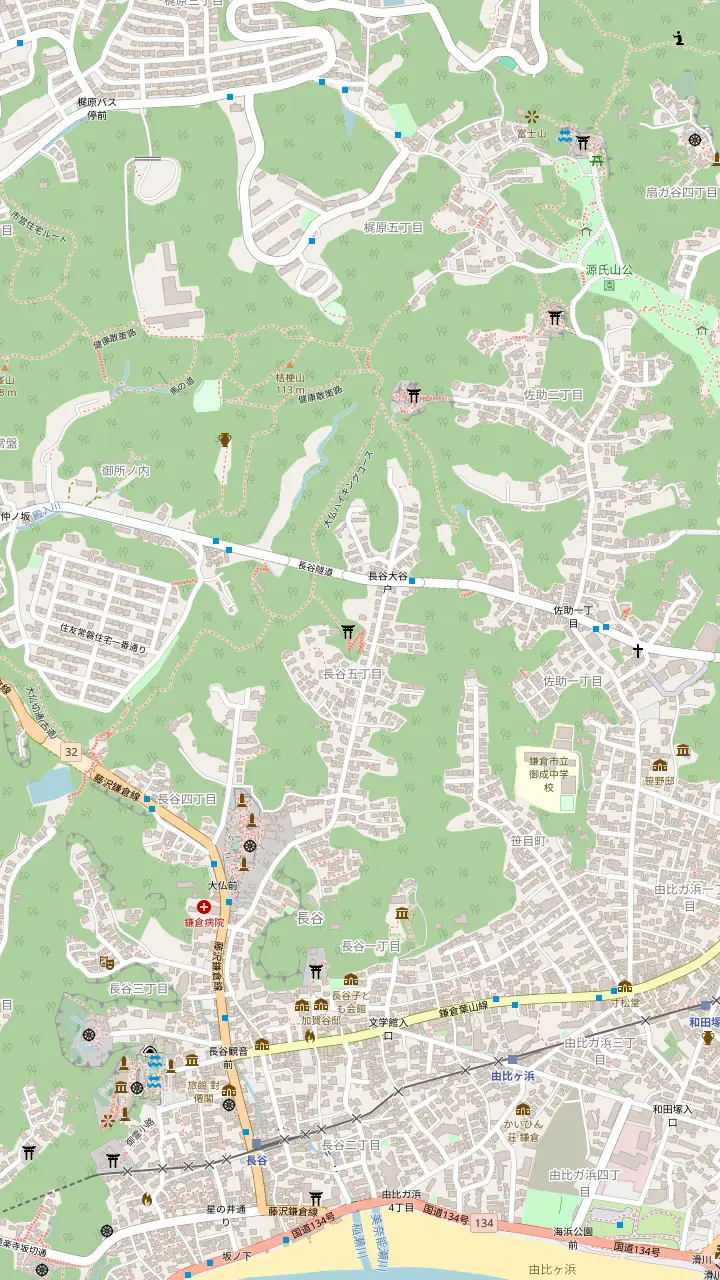
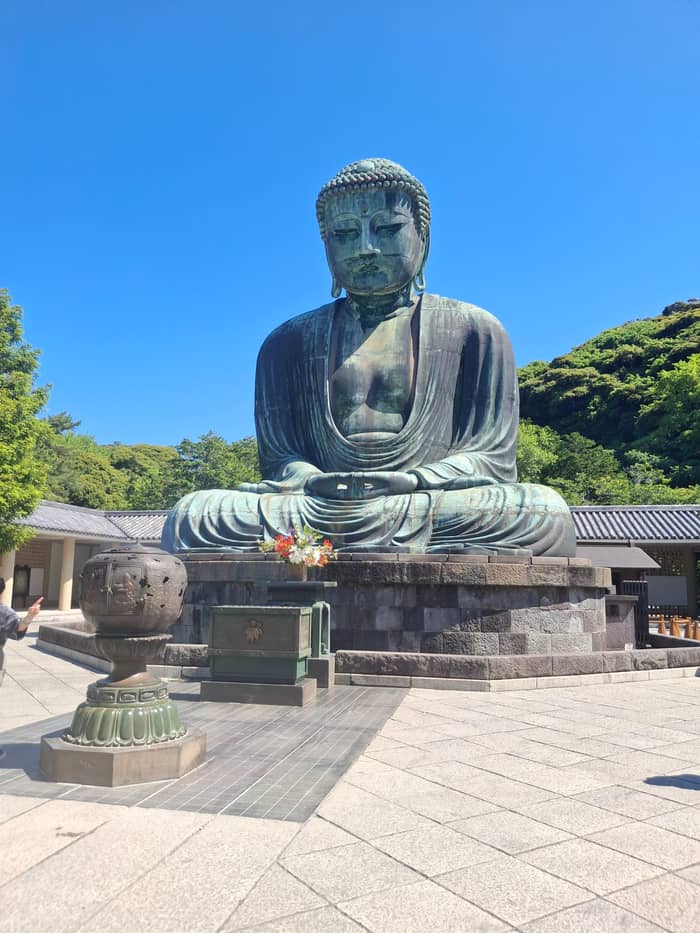
Enoden stop; the Great Buddha is a 7-minute walk and Hasedera Temple a 5-minute walk.
The Great Buddha sits in the open air, a National Treasure about 11.3 meters tall.
Google MapsEleven-headed Kannon, 9.18 meters tall, with a sea-view platform on the upper ground.
Google MapsA spring where crowds wash money; a 20-minute walk from Kamakura Station.
Reached through dozens of red-bannered torii gates and a flight of stairs.
Enshrines the court noble Hino Toshimoto, who died in 1332; 25 minutes on foot from Jochiji.
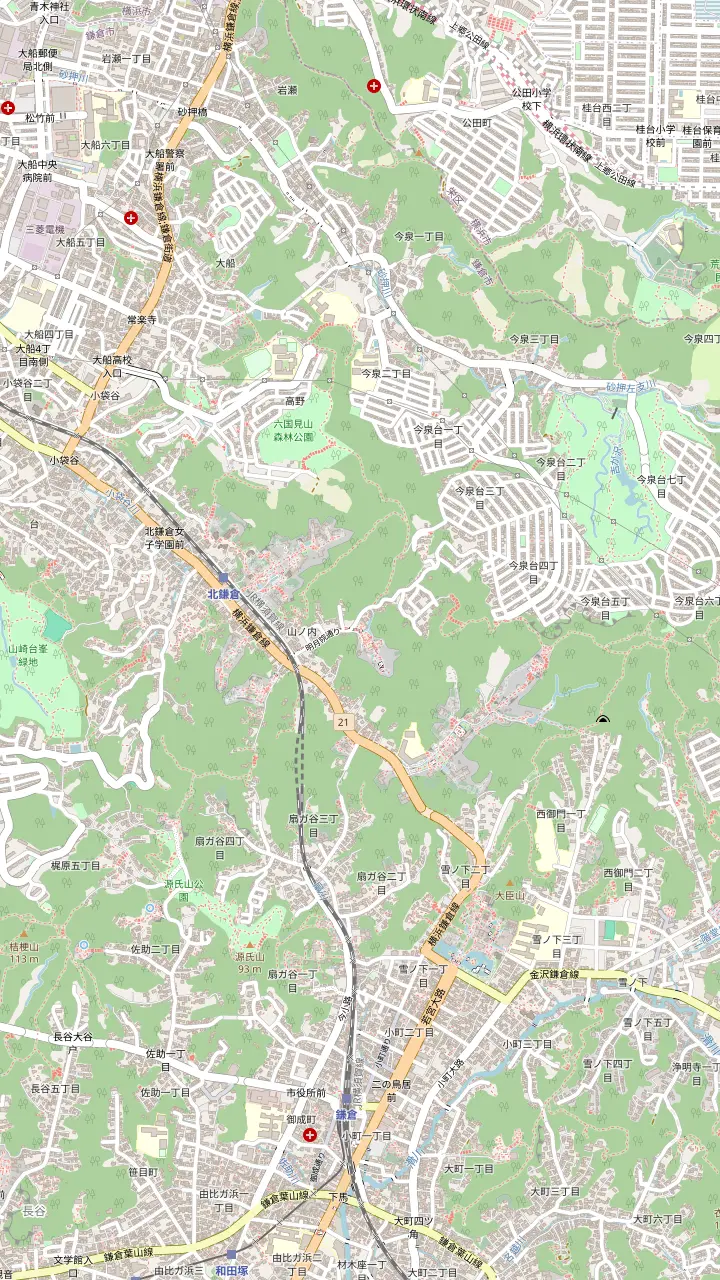
Station for Engakuji, a 1-minute walk away, and for Jochiji.
Founded in 1282; open 8:30 to 16:30 from March to November, admission 500 yen for adults.
Built in 1281; open 9:00 to 16:30, admission 200 yen for adults.
About 2,500 hydrangeas draw visitors to the Kita-Kamakura temples in June.
Ranked first among the Kamakura Gozan; open 8:30 to 16:30, adults 500 yen, cash only.
About 240 steps up from the temple grounds, lined with tengu statues.
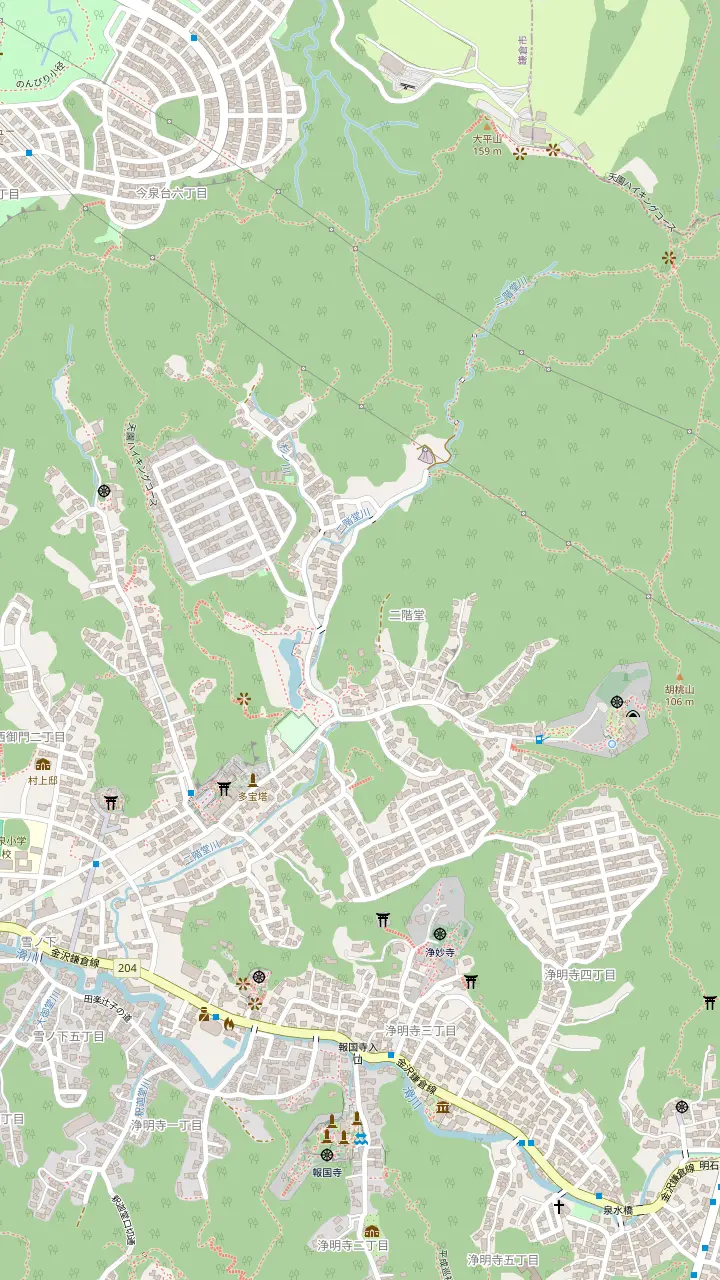
Bamboo garden open 9:00 to 16:00; admission 400 yen, matcha 600 yen.
Rock garden and matcha; open 9:00 to 16:30, adults 100 yen.
A shortcut entrance that climbs about 20 minutes to the Imaizumidai junction.
The highest point of the course at 159.2 m; its one toilet is about five minutes below.
The Tenen course ends at its gate; the stone garden is a Place of Scenic Beauty.
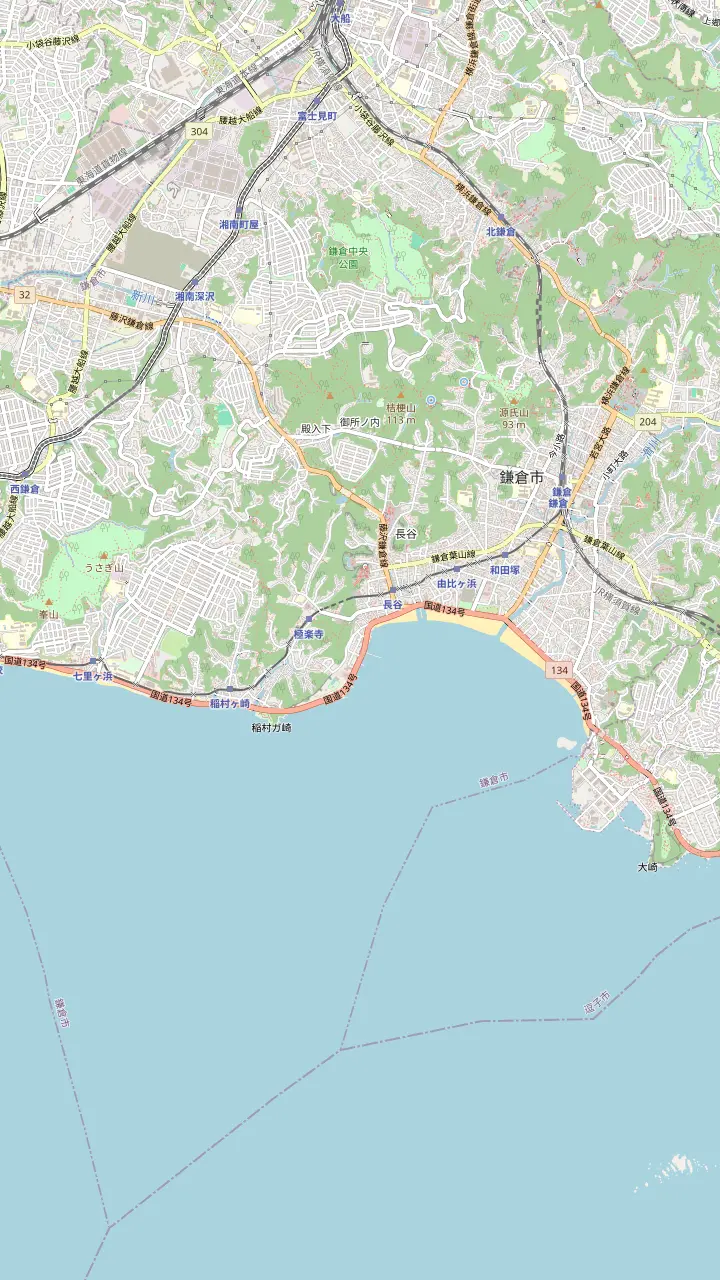
Slightly less crowded than Yuigahama, with a two-minute walk from the Zaimokuza bus stop.
A 15-minute walk from Kamakura Station and 5 minutes from Hase Station.
An Enoden station within 5 minutes on foot of Yuigahama, like Yuigahama and Hase stations.
A cape between Yuigahama and Shichirigahama, free to visit; about 30 minutes is enough.
Popular with surfers throughout the year and known for Mount Fuji views at sunset.
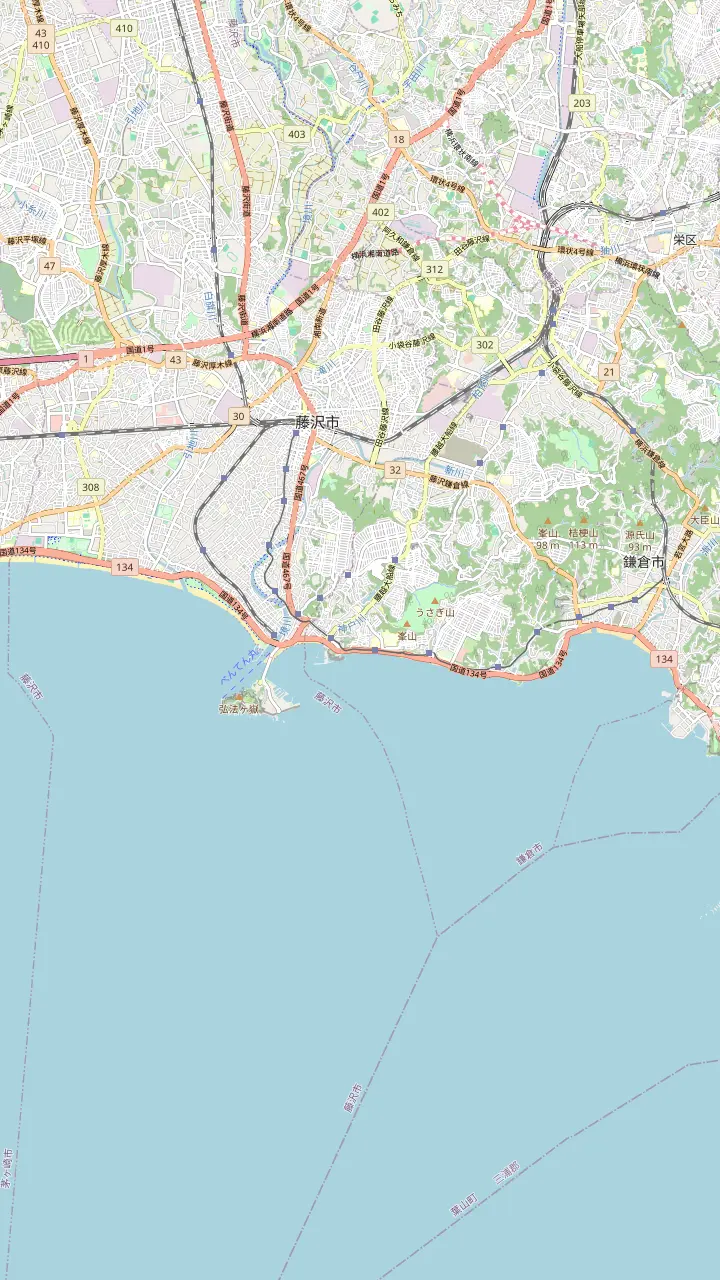
A coastal area that, like Yuigahama and Shichirigahama, draws large numbers of tourists.
Next station along; staff are on hand only from 9:00 to 18:00.
Unmanned station EN08 beside the railway crossing; no restrooms.
A three-minute walk from Koshigoe Station; the harbor shop sells fresh fish.
In 2026 open for swimming from July 1 to September 6; the Tenno-sai sea procession began here at 11:00.
In 2026 open from July 1 to September 13; the Enoshima fireworks were launched from here at 19:40.
Base map: © OpenStreetMap contributors (ODbL)
Enoshima is a small island you can cross on foot, with a shrine, a lighthouse tower, a garden and sea caves. Here is what each stop costs, how long it takes and how to plan it.
Editorial team, kamakuradaytrip.quest · Updated November 1, 2026 · A 7-minute read
Facts first
Enoshima is a small island on the Shonan coast, reached across Benten Bridge, and the walk around it is short: the island has a circumference of about 4 km.1 Despite that, it packs in a shrine first built in 552, a lighthouse tower with a garden at its foot, sea caves cut by the waves, an aquarium and a lively street of shops and restaurants.2,9
The whole place is built around one goddess. Together with Miyajima and Chikubushima, Enoshima is counted as one of the three most famous shrines to Benzaiten in Japan, and its caves were a sacred site for pilgrims.3 The legend of the three scales dates to the year 1190, when the leader of the Kamakura shogunate is said to have prayed in the caves and seen Benzaiten appear as a snake.10
Enoshima pairs naturally with Kamakura as the seaside half of a day. The day tour this site sells ends its list of stops with Enoshima after the temples, and it is listed from $51 for a day of 9 to 9.5 hours. If you would rather go alone, the sections below set out the island in the order you would walk it.
Stop by stop
| Stop | What it is | Adult price | Good to know |
|---|---|---|---|
| Bronze torii | Gate over the bridge | Free | Rebuilt in 1821 |
| Hoanden hall | Benzaiten statues | 200 yen | Open 8:30 to 16:30 |
| Cocking Garden | Botanical garden | Free to 17:00 | 10,000 square meters |
| Sea Candle | Observation tower | 800 yen | Open 9:00 to 20:00 |
| Iwaya caves | Two sea caves | 500 yen | 152 and 56 meters deep |
| Benten-maru | 10 minute boat | 400 yen | Irregular departures |
From Fujisawa's tourist association, Visit Kanagawa and the Sea Candle operator.11,18,24,23,5,15,6,7,22
The walk starts at the bronze torii gate just over the bridge. It was first made of wood and was rebuilt in bronze in 1821, and it is a designated cultural property of Fujisawa City.11 From there Benzaiten Nakamise Street climbs towards the vermilion Zuishinmon gate, lined with traditional inns, souvenir shops and restaurants, so leave time for snacks.12 The gatehouse is modelled on the sea-floor palace of the Urashima Taro tale.17
Enoshima Shrine is really three shrines, Hetsumiya, Nakatsumiya and Okutsumiya, spread along the island.2 The Hoanden hall beside Hetsumiya shows the statues. It can be visited from 8:30 to 16:30 and costs 200 yen for an adult, 100 yen for ages 13 to 18 and 50 yen under 13.18 Inside, the colored wooden Happi-Benzaiten is said to have been donated by Minamoto no Yoritomo in 1182, and the famous Naked Benzaiten, an artistic and musical goddess, is believed to date from the Kamakura period.19
The climb to the top is steep, and the Enoshima Escar helps. Opened in 1959 as Japan's first outdoor escalator, it takes about 4 minutes against 20 minutes on the stone steps, and it only runs upwards.13 A ticket for all its sections costs 500 yen for an adult.20 Walk back down on the steps and you see the shrine at your own pace.
At the top of the island sits the Samuel Cocking Garden, a botanical garden founded by an English merchant. It covers 10,000 square meters and holds South Pacific plants alongside seasonal flowers.24 Entry is free until 17:00.23 If you stay and leave after 17:00 the fee is 500 yen for adults and 250 yen for children.23
The tower inside the garden is the Enoshima Sea Candle, rebuilt on the site of the old lighthouse and reopened after renovation on April 29, 2003.27 It stands 59.8 meters tall and 119.6 meters above sea level, and Fujisawa's tourist association calls it the largest privately owned lighthouse in Japan.4 The operator's own page gives its glass observation room as 101.5 meters above sea level.28 The sources give different heights above sea level, and the lower figure is the one for the glass room.
Allow time for the view. On a clear day you can see Mount Fuji, and the lookout is said to reach as far as the Yokohama Landmark Tower, Tokyo Skytree and Izu Oshima.25 The tower is open from 9:00 to 20:00 with last entry at 19:30, and an adult ticket costs 800 yen and a child ticket 400 yen.15,5 Late afternoon works well: you get the daylight first and the lights afterwards.
Decision helper
Pick by what you want from the island
If I want the view
Sea Candle
Fuji and, on clear days, Tokyo Skytree are named from the tower.25
If I like history and legends
Iwaya caves
Benzaiten, Kobo Daishi and Yoritomo are all tied to the caves.26
If I have kids
The aquarium
Japan's first modern aquarium, opened in 1954.9
If I want the cheapest way
Enoshima 1 day ticket
One ticket covers the garden, tower, Escar and caves.21
If I am short on legs
The Escar
A ride of about 4 minutes against 20 minutes of steps.13
Three ways to see the island
Free to wander
Bridge to Zuishinmon
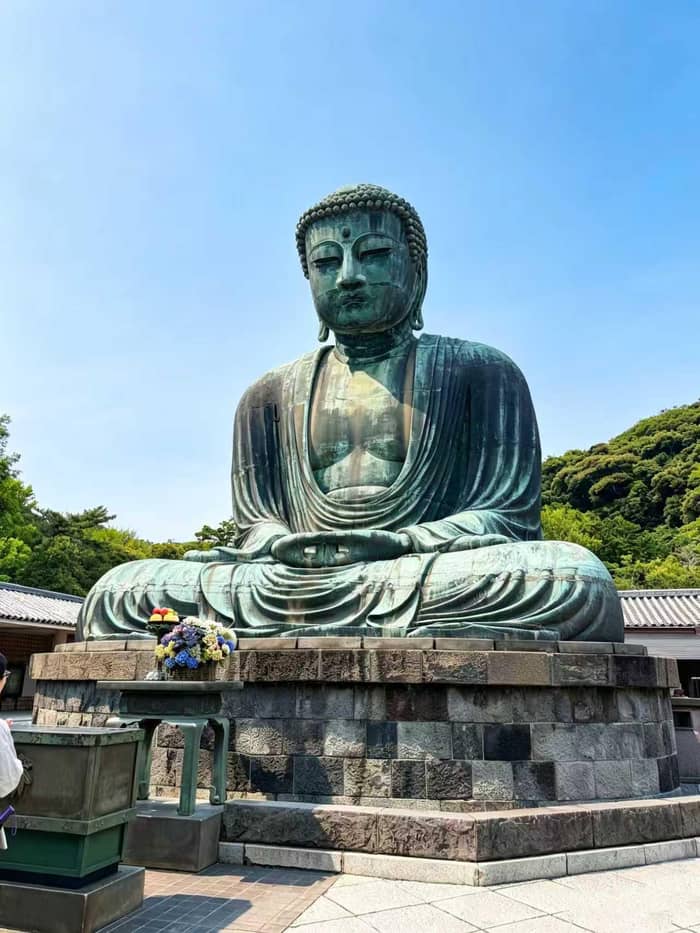
Best views
Sea Candle and garden
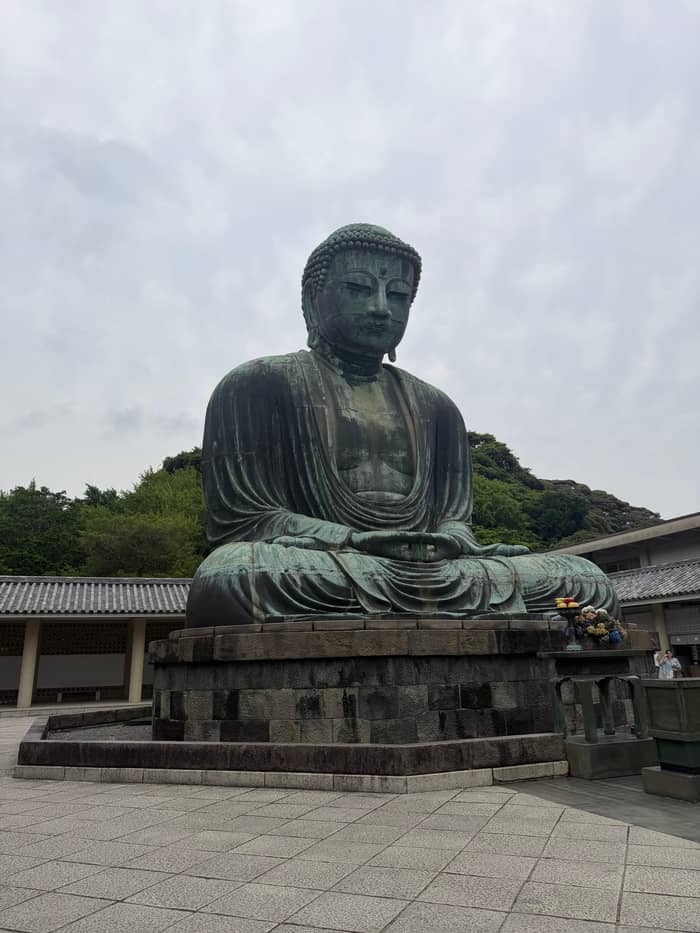
Sea level
Iwaya and Benten-maru
The far side of the island is where the sea has done its work. The Enoshima Iwaya caves are two caves, 152 meters and 56 meters deep, carved by tidal erosion.6 They are open from 9:00 to 17:00, with longer hours in summer and at events, and cost 500 yen for adults and 200 yen for elementary school children.7 A typhoon can bring closures, so check the weather before you go.
Candles are offered free at the first cave, and holding one in your hand is the point: you walk in by candle light past stone statues that pilgrims gave over the centuries.14 The caves are tied to the origin of the shrine. Benzaiten is said to have appeared to the monk Kobo Daishi here, Minamoto no Yoritomo is said to have prayed here for victory, and at the back of the right-hand cave is the birthplace of Enoshima Shrine.26
Near the caves, a few small extras reward a detour. The Dragon's Love Bell, built in 1996, is where couples ring the bell and hang a padlock with their names on the fence.84 And the Benten-maru boat runs a 10 minute cruise from the foot of the bridge to the Chigogafuchi Abyss for 400 yen, with irregular departures that you should confirm on the day.22
Cost calculator
Type your group size to price four ways of visiting the island.
Weigh up 4 choices
Type your group size to price four ways of visiting the island.
≈
View≈
View≈
View≈
ViewStarting prices from GetYourGuide, converted at the ECB reference rate; the booking page shows the exact sum.
An island afternoon
Early afternoon
The bronze torii stands just past the bridge, rebuilt in 1821.11
Afternoon
Walk Benzaiten Nakamise Street to the Zuishinmon gate.12
Afternoon
Ride up in about 4 minutes instead of climbing 20 minutes of steps.13
Late afternoon
The caves open from 9:00 to 17:00, longer in summer, and free candles are handed out.7,14
Before sunset
The tower is open until 20:00, last entry 19:30.15
Evening
Ride the Enoden to Kamakura in 30 minutes.16
If the weather turns, the Enoshima Aquarium is the obvious refuge. It opened in 1954 as Japan's first modern aquarium, and its Big Sagami Bay Tank holds a school of 8000 sardines.9 A separate admission ticket is sold for it. Food is the other pleasure on the island: local specialties include seafood rice bowls, spiny lobster bowls, octopus rice crackers and married couple buns.85
On the mainland, Ryuko-ji temple is worth a short detour. It stands where, at about 2 AM on 13 September 1271, a bright light over Enoshima is said to have saved the monk Nichiren from execution, and its 5-storey wooden pagoda is the only orthodox one of its type in the prefecture.66
The yacht harbor beside the island was built as the sailing venue for the 1964 Tokyo Olympics, and around 1000 yachts are moored there.67 It is a pleasant place to sit at the end of the day, away from the shrine street. On clear days Mount Fuji can be glimpsed from several points around the island, and the rocky shore on the far side is the classic spot for a sunset with Fuji in view.86
Video
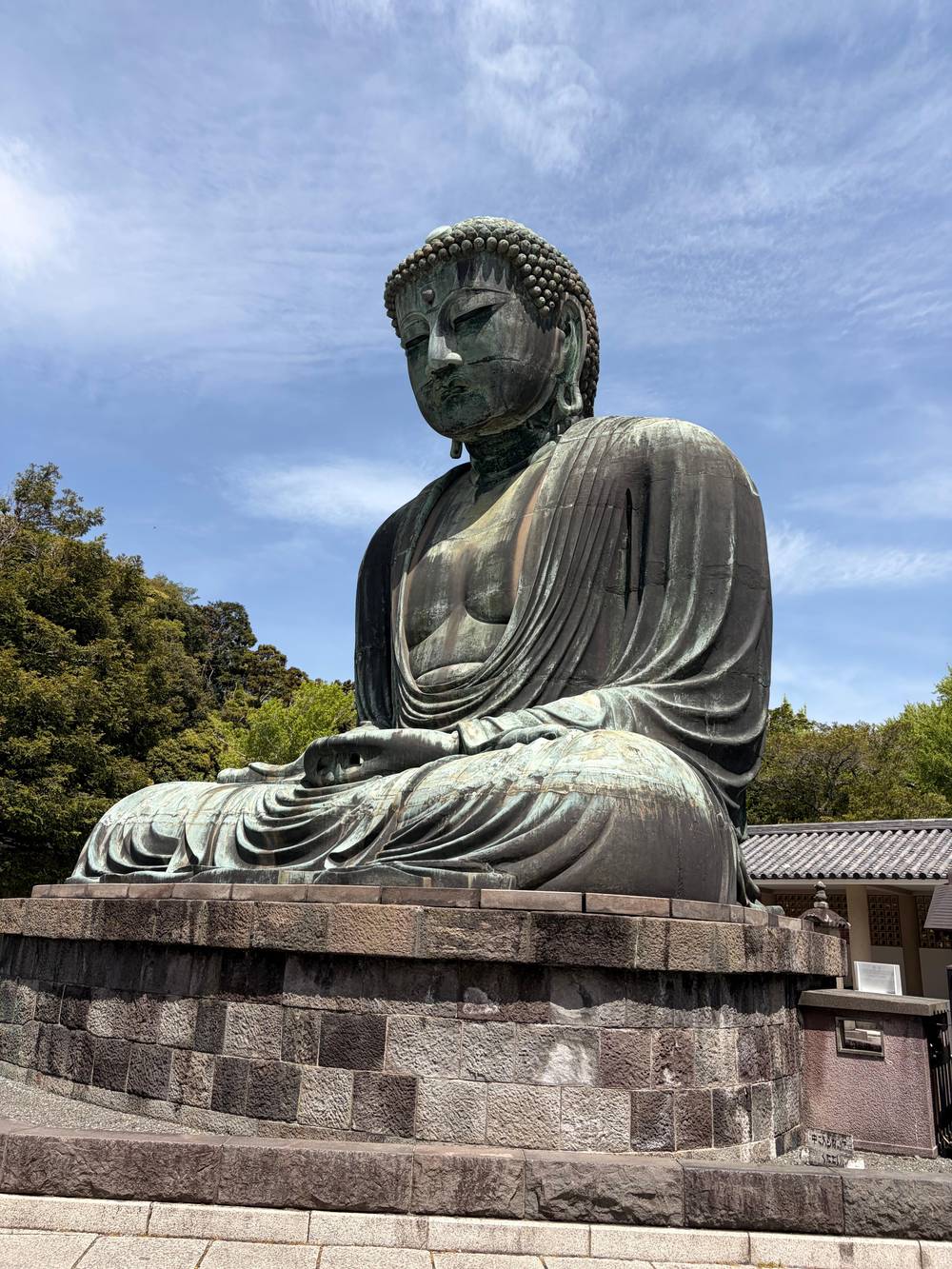
Unique Japan Travel on YouTube · YouTube stays silent until you press play.
It is said that in the past, during a visit to the caves, Benzaiten appeared to the Buddhist monk Kobo Daishi (also known as Kukai)
Checklist
Enoshima is an easy trip from Tokyo. Direct trains from Shinjuku, Tokyo and Ueno take around 1 hour, and the Odakyu Romancecar is described as the most convenient option from Shinjuku.8,87 If you are coming from Kamakura, the Enoden line links Kamakura and Fujisawa in just 30 minutes, and it passes the island on the way.16 The Shonan Monorail is a rare suspended line that is a ride in itself.88
The stations sit at different distances. The garden is about 25 minutes on foot from Enoden Enoshima Station and about 20 minutes from Odakyu Katase-Enoshima Station.64 To save on tickets, the Enoshima 1 day ticket covers the garden, the Sea Candle, the Escar and the Iwaya caves for 1,550 yen for adults and 700 yen for elementary school students.21 The Enoshima-Kamakura Freepass, bought from Shinjuku, costs 1,640 yen for adults and 430 yen for children and allows hopping on and off the Enoden.89
The island changes after dark. The garden runs seasonal events: lanterns from early August to mid September, the Shonan Candle from early October to early November, and the Jewels of Shonan from early December to the end of February.90 About 1,000 lanterns are set up around the island for the lantern festival, and around 10,000 candles are lit in the garden for the Shonan Candle.91,92
FAQ
The island has a circumference of about 4 km, and the main sights are a short walk apart.1
Elementary school children pay 200 yen, and the caves open from 9:00 to 17:00, longer in summer.7
It costs 1,550 yen for adults and 700 yen for elementary school students, and covers the garden, Sea Candle, Escar and Iwaya caves.21
Sources
Questions about the Kamakura trip? We reply in minutes.