Easiest
Kamakura
Temples and the coast
- By train55 minutes
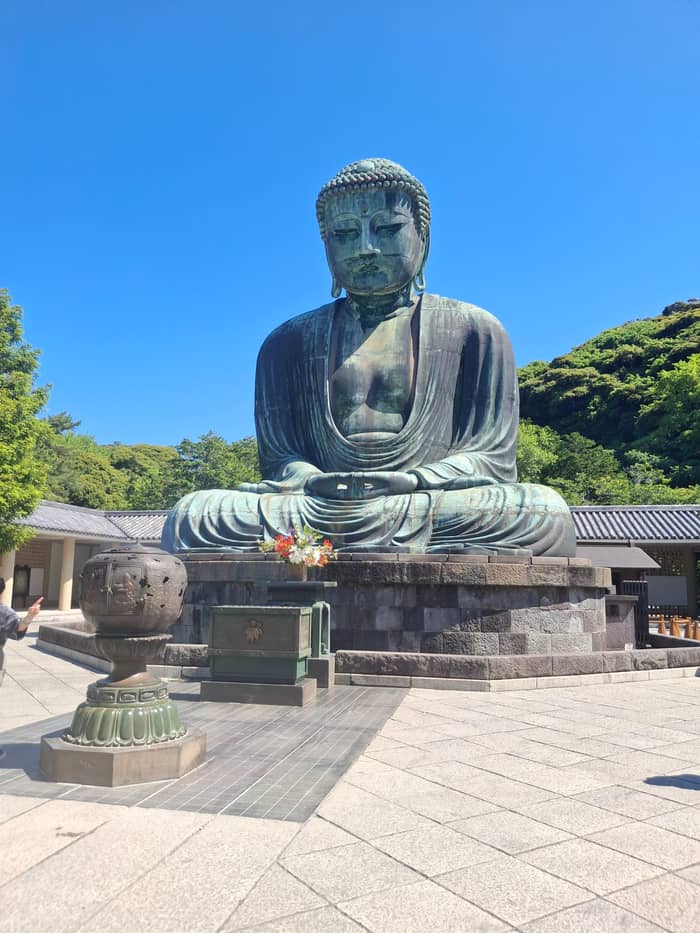
- Great Buddha13.35 m tall
- Pass1,640 yen
Guides
Language
Currency
Check open daysstarting at $51 · plans can change freeHelp me choose
Answer 2 questions
Two taps, and the day trip that fits you appears.
Our suggestion
from $88
Three classic day trips out of Tokyo, three different kinds of day. Here is what Kamakura does well, where it falls short, and how it stacks up against its rivals.
Editorial team, kamakuradaytrip.quest · Updated November 1, 2026 · A 6-minute read
Facts first
For most first-time visitors to Tokyo, yes. Kamakura is about a one-hour train ride away, and the Japan National Tourism Organization says a visit can easily fill a whole day and recommends staying overnight, which is a fair sign that there is enough here to justify the trip.9,10
What it offers is a rare combination: a samurai-era capital with Zen temples, a shrine at the heart of the old city, a very large bronze Buddha in the open air, and a coastline with a small train and a little island.
What it does not offer is silence, mountains or a big-ticket spectacle. If you are after cherry-blossom crowds, hot springs or Edo-era splendor, other destinations match your wish better, and the sections below say where.
Side by side
| Trip | Time | Pass | Draw |
|---|---|---|---|
| Kamakura | 55 min | 1,640 yen, 1 day | Temples, sea |
| Hakone | About 80 min | 7,100 yen, 2 days | Mountains |
| Nikko | Around 110 min | Not compared | UNESCO shrines |
Times from JNTO, Odakyu and Nikko Kotsu; passes are Odakyu's Enoshima-Kamakura Freepass and Hakone Freepass from Shinjuku, and the draw column summarizes the sources above.3,20,4,21,22,6
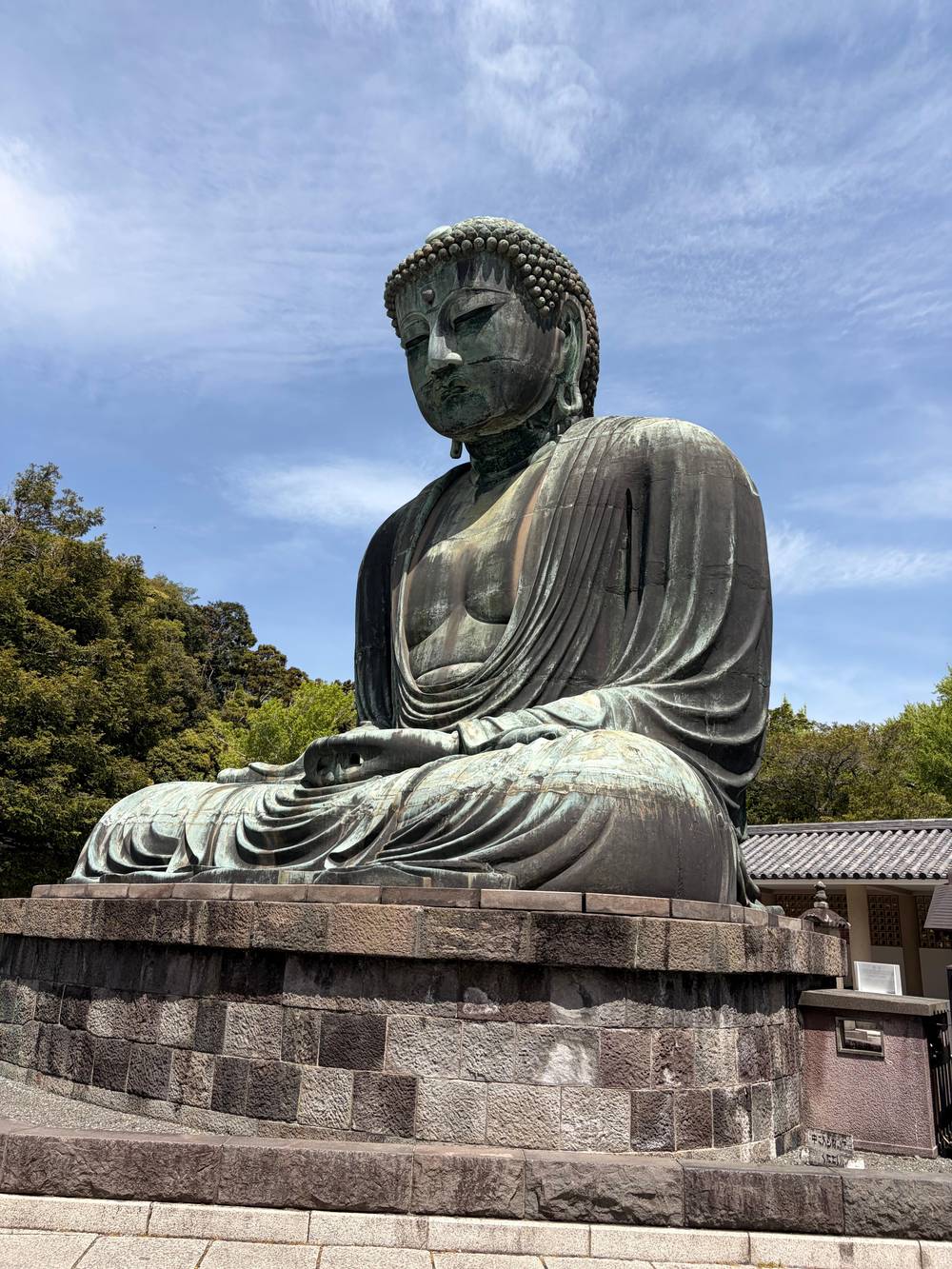
The Great Buddha at Kotoku-in is 13.35 m tall including its platform and weighs 121 tonnes, and it sits in the open air, which is unusual among large Buddha statues in Japan.1,11,12 Admission is 300 yen for adults.13
Tsurugaoka Hachimangu is the heart of the old city; Minamoto no Yoritomo, who established the Kamakura Shogunate, moved it to its present location in 1180.14 Kenchoji ranks first among Kamakura's Five Great Zen Temples, and Hokokuji is known for its bamboo forest, where you can take matcha tea.15,16,17
Add the coast. Enoshima is 23 minutes from Kamakura Station on the Enoden, and Odakyu calls the area a seaside escape just an hour from central Tokyo.18,2 On a clear day Mt. Fuji can be seen from the train over Cape Koyurugi.19
Time from Tokyo
If the Great Buddha were all there was, Kamakura would be a quick stop. The reason a visit fills a day is the layers around it. Hasedera, a 5-minute walk from Hase Station, has gardens and a lookout platform with a view over the city and the ocean.23,24
Meigetsuin is known as the Hydrangea Temple and was the first temple in Kamakura to become famous for its gardens.25 Komachi Street, 2 minutes from Kamakura Station, is the street to eat and shop on, and it runs toward the shrine.26,27
These smaller stops are what separate a rushed visit from a good one. They also explain why different visitors come away with different favorites, which is the best argument for giving Kamakura a whole day instead of a morning.
Three day trips
Easiest
Temples and the coast
Scenery
Mountains and lakes
Heritage
Shrines in the forest
Hakone is the closest rival, and the two are different in kind. The Hakone Tourist Association gives a train ride from Tokyo of 50 to 90 minutes, depending on the service, and Odakyu's Romancecar takes about 80 minutes between Shinjuku and Hakone-Yumoto.5,20 Kamakura's Tokyo Station ride is 55 minutes.3
Hakone is a mountain and lake region; Kamakura is a town of temples by the sea. Hakone's passes are built for a stay, such as the Hakone Freepass at 7,100 yen for 2 days from Shinjuku.22 Kamakura's Enoshima-Kamakura Freepass is 1,640 yen for one day.21
If you want volcanic scenery and onsen, pick Hakone; if you want temples, a beach and an easy day, pick Kamakura. A combined day exists, with Kotoku-in as its only Kamakura stop before the Fuji lakes, but it gives Kamakura just 20 minutes. You cannot do both justice in one day.
Cost calculator
Type your head count and see three listings priced.
Weigh up 3 choices
Type your head count and see three listings priced.
≈
View≈
View≈
ViewStarting prices from GetYourGuide, converted at the ECB reference rate; the booking page shows the exact sum.
Nikko is the heritage trip. Toshogu, together with Rinnoji Temple and Futarasan-jinja Shrine, forms the UNESCO World Heritage site called the Shrines and Temples of Nikko.6 It is also further away: the limited express from Asakusa to Tobu Nikko Station takes around 110 minutes, and Tobu gives approximately 2 hours.4,28
Kamakura is closer and lighter on the day. The JR line from Tokyo Station takes 55 minutes, which leaves more of your day on the ground.3 The rewards differ too: Nikko's draw is its shrines and temples, Kamakura's is Zen temples, a great Buddha and a seaside train.
If you want a World Heritage listing, Nikko is the reason to go for the shrines and temples; if you want an easy day with a mix of temples and the sea, Kamakura is the lighter plan. With a longer stay you can give each its own day.
Video
Japan by Food on YouTube · YouTube stays silent until you press play.
A visit to the Kamakura area can easily fill up a whole day with the amount of sights to see. Overnight stays are strongly recommended.
Checklist
Be honest about the downsides. The city gets very crowded during the Kamakura Festival in April and the Reitaisai horseback archery festival in September, and the tourist association says roads near the popular sights are heavily congested on weekdays and weekends.7,29
Summer is hard. July and August are scorchingly hot, often exceeding 35°C, and the rainy season spans June and July.8,30 Anyone who dislikes heat and humidity, or who cannot manage stairs and walking between temples, will enjoy a spring or autumn visit more.
Finally, Kamakura is not a place to cram. A visit can fill a whole day, so treating it as a quick stop between other plans misses the point.10 If you have less than a full day, pick a pair of sights, such as the Great Buddha and Hasedera, rather than a long list.
FAQ
Nikko takes around 110 minutes by limited express from Asakusa.4
Toshogu, Rinnoji and Futarasan-jinja form the UNESCO site.6
The city gets very crowded at those times.7
Our bus day includes Hase-dera and Kotoku-in tickets and starts from $51.
Sources
Questions about the Kamakura trip? We reply in minutes.